
Whole House Surge Protector Installation: Worth It in LA?
Wondering if whole-home surge protection is necessary in Southern California? Learn how power grid swings, EVs, and modern electronics make protection essential.
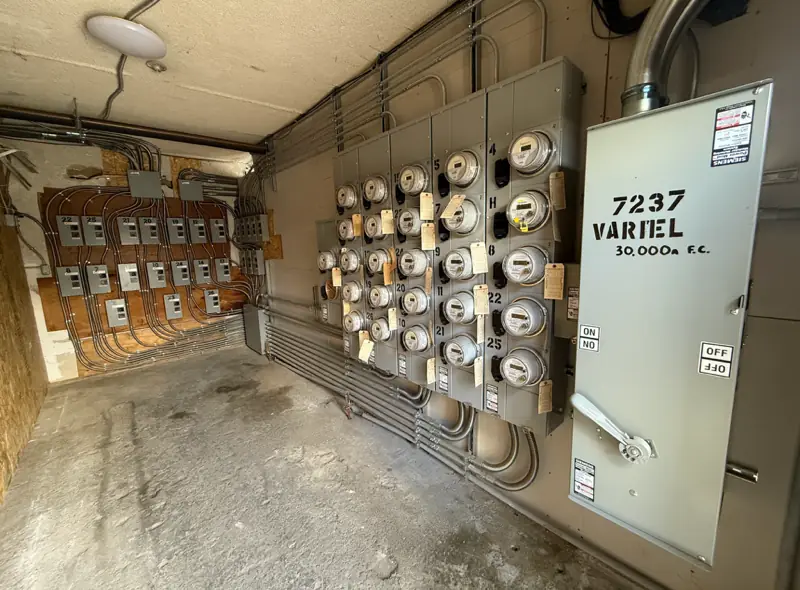
When Southern California homeowners think about electrical surges, they usually picture violent Midwestern lightning storms cracking across the sky. Because Los Angeles and surrounding valleys rarely see catastrophic lightning strikes, many people assume a few plastic power strips from the hardware store are plenty of defense.
That assumption is costly. In reality, lightning accounts for less than twenty percent of all electrical surges. The vast majority of voltage spikes originate either right inside your home or from daily utility grid switching across the Los Angeles Department of Water and Power (LADWP) and Southern California Edison (SCE) distribution networks. If you have high-end electronics, an electric vehicle charger, variable-speed HVAC compressors, or modern smart appliances, a whole house surge protector installation is one of the most effective insurance policies you can put on your electrical system.
Why Southern California Homes Face Hidden Electrical Surge Damage
A power surge—technically called a transient voltage spike—is an unexpected boost in electrical voltage that significantly exceeds the standard 120-volt flow entering your home. While standard power alternates smoothly at 60 Hz, transient surges can send thousands of volts pulsing through copper branch wiring in microsecond bursts.
Over time, repetitive exposure causes cumulative electrical surge damage. Just as high blood pressure quietly damages human arteries without immediate symptoms, micro-surges steadily degrade delicate microprocessors, capacitors, and solder joints inside your home’s most expensive equipment.
The Grid Reality: Heatwaves, Flex Alerts, and Substation Switching
From Pasadena and Glendale down to Santa Monica and Torrance, Southern California experiences intense seasonal strain on the power grid. During late summer heatwaves, grid operators manage immense swings in regional demand. When industrial loads disconnect or utility substations switch capacitor banks to stabilize voltage during rolling Flex Alerts, power spikes ripple across residential distribution lines into your service panel.
Internal Surges: The Enemy Inside Your Own Walls
Roughly 80 percent of power surges start inside your home. Every time a heavy motorized load turns on or off, it creates an inductive kickback. Common culprits include:
- Central air conditioning condensers and heat pumps kicking on during hot San Fernando Valley afternoons.
- Level 2 EV chargers drawing and releasing 32 to 48 amps of current.
- Variable-speed pool pumps cycling on automated timers.
- High-draw kitchen appliances like refrigerators, microwave inverters, and dishwashers.
Every time those motors disengage, the magnetic field collapses and pushes hundreds of volts back into your panel. From there, the excess voltage travels instantly across your branch circuits, targeting television mainboards, smart thermostats, computer power supplies, and laundry control boards.
Power Strips vs. Whole-Home Surge Protective Devices (SPDs)
A common question we hear on service calls across Los Angeles is: "Can't I just plug my computer and TV into surge strips?"
Point-of-use surge strips (classified by UL as Type 3 SPDs) have a place, but relying on them alone leaves major gaps. Here is how they compare against a dedicated spd installation directly at the main panel:
| Feature | Hardware Store Power Strip (Type 3) | Panel-Mounted Whole-Home SPD (Type 1 or 2) | | :--- | :--- | :--- | | Point of Defense | At single wall receptacles | At the main electrical panel (source of entry) | | Surge Capacity | Low (typically 500 – 1,500 Joules) | High (typically 40,000 – 100,000+ Amps per phase) | | Protects Hardwired Loads? | No (cannot protect HVAC, water heater, EV charger) | Yes (protects every circuit connected to the panel) | | Clamping Response | Often too slow for high-magnitude spikes | Millisecond clamping before voltage enters house branch lines | | Durability & Longevity | Fails silently; strip continues passing power without protection | Features LED status indicators and audible alerts upon end-of-life |
For optimal protection, the electrical industry recommends a cascading approach: a panel-mounted Type 1 or Type 2 SPD at your main breaker box to absorb massive external and panel-level spikes, backed up by Type 3 strips on sensitive computing or home theater gear to catch residual micro-surges.
The National Electrical Code (NEC) and California Requirements
If you have pulled permits recently with the Los Angeles Department of Building and Safety (LADBS) or city building departments in Burbank, Beverly Hills, or Culver City, you may already be required to install an SPD.
Starting with the 2020 National Electrical Code (NEC Section 230.67), which is integrated into updated California Electrical Codes (Title 24, Part 3), surge protection is mandatory for all new residential dwelling units and for existing homes undergoing service panel replacements or upgrades.
Building officials instituted this mandate because modern homes are packed with life-safety equipment that relies on microprocessors: arc-fault circuit interrupters (AFCIs), ground-fault circuit interrupters (GFCIs), smoke and carbon monoxide detectors, and smart shutoff valves. If a voltage surge burns out the internal logic of an AFCI breaker, your family loses critical protection against electrical fires without even realizing it.
Signs You Should Not Wait to Install an SPD
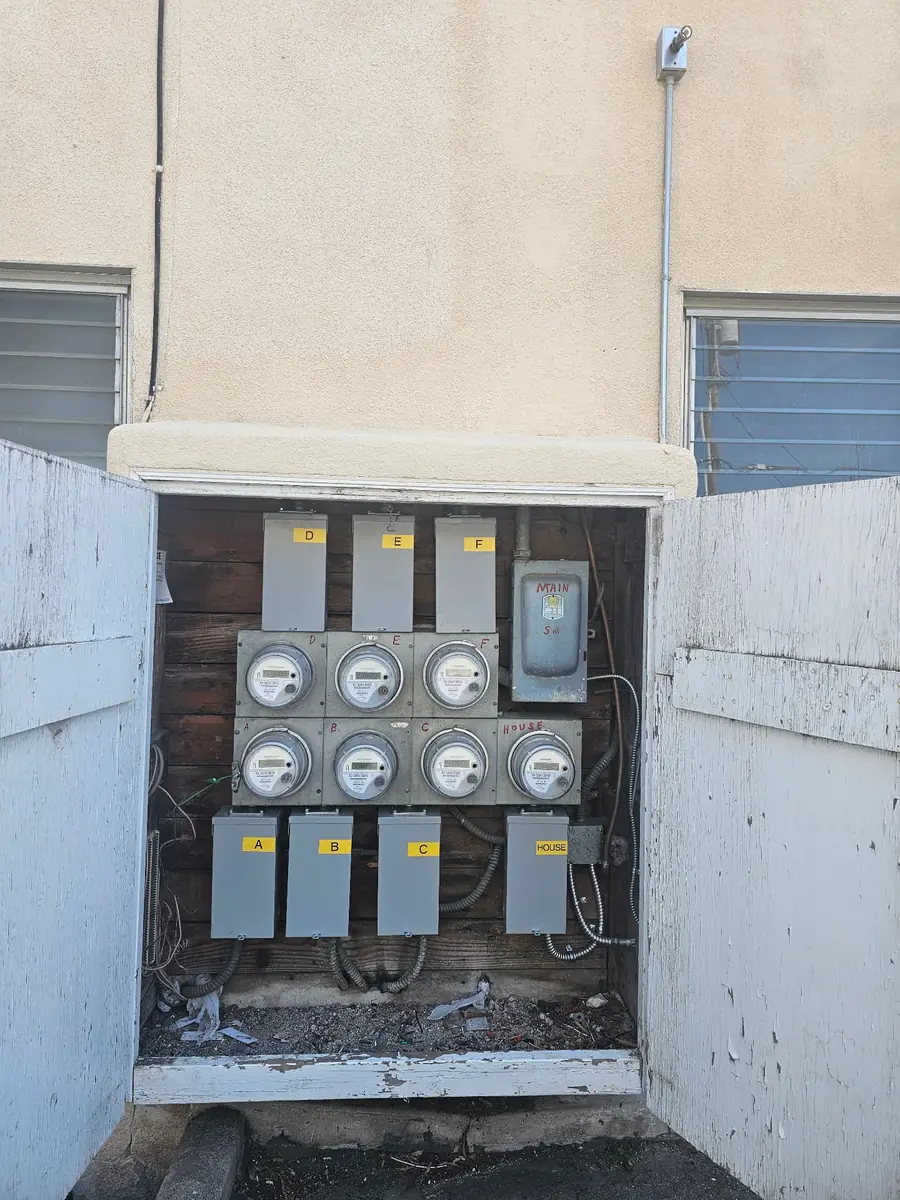
Because surges are largely invisible, many homeowners put off electrical panel upgrades until an expensive breakdown occurs. You should prioritize an SPD installation if you recognize any of the following warning signs:
- Unexplained Appliance Failures: Your microwave clock resets randomly, your refrigerator display glitches, or you have had to replace control boards on your washer or dryer prematurely.
- Flickering Lights During Motor Starts: When your central air or EV charger kicks on, overhead recessed lights momentarily dim or flutter.
- Nuisance Tripping on AFCI/GFCI Breakers: Modern electronic breakers are sensitive. Small voltage spikes can cause them to trip unexpectedly when motors cycle.
- High-Value Upgrades Added Recently: If you recently invested in a ductless mini-split system, high-efficiency heat pump, rooftop solar inverter, or an EV charging station, you have thousands of dollars in circuit boards sitting exposed to raw line fluctuations.
- Older Electrical Service: Older panels in homes throughout East Los Angeles, Long Beach, or the San Fernando Valley often lack modern grounding infrastructure, leaving incoming surges with nowhere safe to divert.
To see how our team handles panel assessments and safety upgrades, review our full line of residential electrical services.
Surge Protection Cost and Permitting in Los Angeles
Homeowners naturally want to know what to budget. Realistic surge protection cost depends on the layout of your current service, whether the unit is installed standalone or bundled with other panel work, and the brand of equipment installed.
What Dictates the Price?
- Standalone Installation vs. Panel Modernization: If your panel already has two free breaker slots directly below or next to the main breaker, a licensed electrician can mount a Type 2 SPD relatively quickly. In the greater Los Angeles area, standalone professional installation typically ranges from $450 to $950, including the commercial-grade SPD device, dedicated two-pole breaker, hardware, and labor.
- Panel Space Limitations: If your main breaker panel is completely full or utilizes obsolete tandem breakers, an electrician may need to install a subpanel or reconfigure circuits to make physical room for the SPD leads. This can bring total costs into the $850 to $1,500 range.
- Grounding System Integrity: A surge protector cannot do its job without a clean, low-resistance path to earth. It operates by dumping excess current harmlessly into the grounding electrode system. If your home has missing ground rods, corroded ground clamps, or unbonded copper plumbing, the grounding system must be brought up to current code first.
- Permits and Inspections: Standalone additions may or may not require separate plan checks depending on local city guidelines, but when done alongside service upgrades, LADBS or local municipal permits ensure that grounding, conductor length, and breaker ampacity meet legal safety thresholds.
Cutting corners by hiring an unlicensed handyman or attempting a DIY install poses severe risks. An SPD must be wired with the shortest, straightest leads possible to react quickly to nanosecond voltage spikes. Loose connections or improper phase balancing can cause the device to fail catastrophically during an actual event.
Frequently Asked Questions
Does a whole-home surge protector protect against direct lightning strikes?
No electrical device on earth can guarantee 100 percent defense against a direct, overhead lightning strike delivering billions of joules of raw energy. However, whole-home SPDs are engineered to absorb and divert the high-voltage side-flashes, indirect strikes to nearby utility poles, and transformer explosions that frequently occur during windstorms and severe weather.
How long does an SPD last before it needs replacement?
Most high-quality panel-mounted surge protectors last between three and seven years, depending on the stability of your local utility feed and the frequency of internal motor cycling. Quality units feature external LED diagnostic lights (and sometimes audible alarms). If a green light turns red or goes dark, it means the internal metal oxide varistors (MOVs) have sacrificed themselves to protect your home and the unit needs replacement.
Can I install an SPD myself if I shut off the main breaker?
We strongly advise against DIY installation. Even with the main breaker turned off, the service entrance cables feeding into the top of the panel remain live with deadly utility voltage unless your local utility company pulls the meter. Working inside a live enclosure requires specialized insulated tools, torque screwdrivers calibrated to manufacturer specifications, and deep familiarity with NEC bonding rules.
Will my homeowners insurance cover surge damage if I don’t have an SPD?
Some homeowners insurance policies cover sudden mechanical breakdown from catastrophic power events, but they almost always require you to pay your deductible first (often $1,000 to $2,500). Furthermore, insurance does not cover the slow, cumulative wear caused by routine micro-surges. Installing an SPD often qualifies you for discounts with major carriers and provides warranty coverage through the SPD manufacturer on connected appliances.
Protect Your Home's Electrical Infrastructure Today
Your home contains thousands of dollars in microprocessors, from the smart inverter running your refrigerator to the high-voltage electronics charging your car. Leaving them unprotected against daily grid fluctuations and internal inductive surges is a gamble you don't need to take.
Since 1991, AA Electrical Services has helped property owners across Los Angeles, the San Fernando Valley, Pasadena, and coastal communities protect their investments with clean, code-compliant electrical work. As a licensed C-10 contractor, we evaluate your panel, inspect your grounding system, and install top-tier surge protective devices tailored to your home's actual load.
Don't wait for a blown circuit board to find out your panel was vulnerable. Call AA Electrical Services today at (818) 437-6736 to speak with an experienced electrician, or visit our contact page to ask a question. You can also request a free estimate online to safeguard your home against unexpected voltage spikes.