Signs You Need an Electrical Panel Replacement in Los Angeles
Learn the critical warning signs that indicate your electrical panel is failing, why older LA homes are at risk, and when to plan an electrical panel replacement.
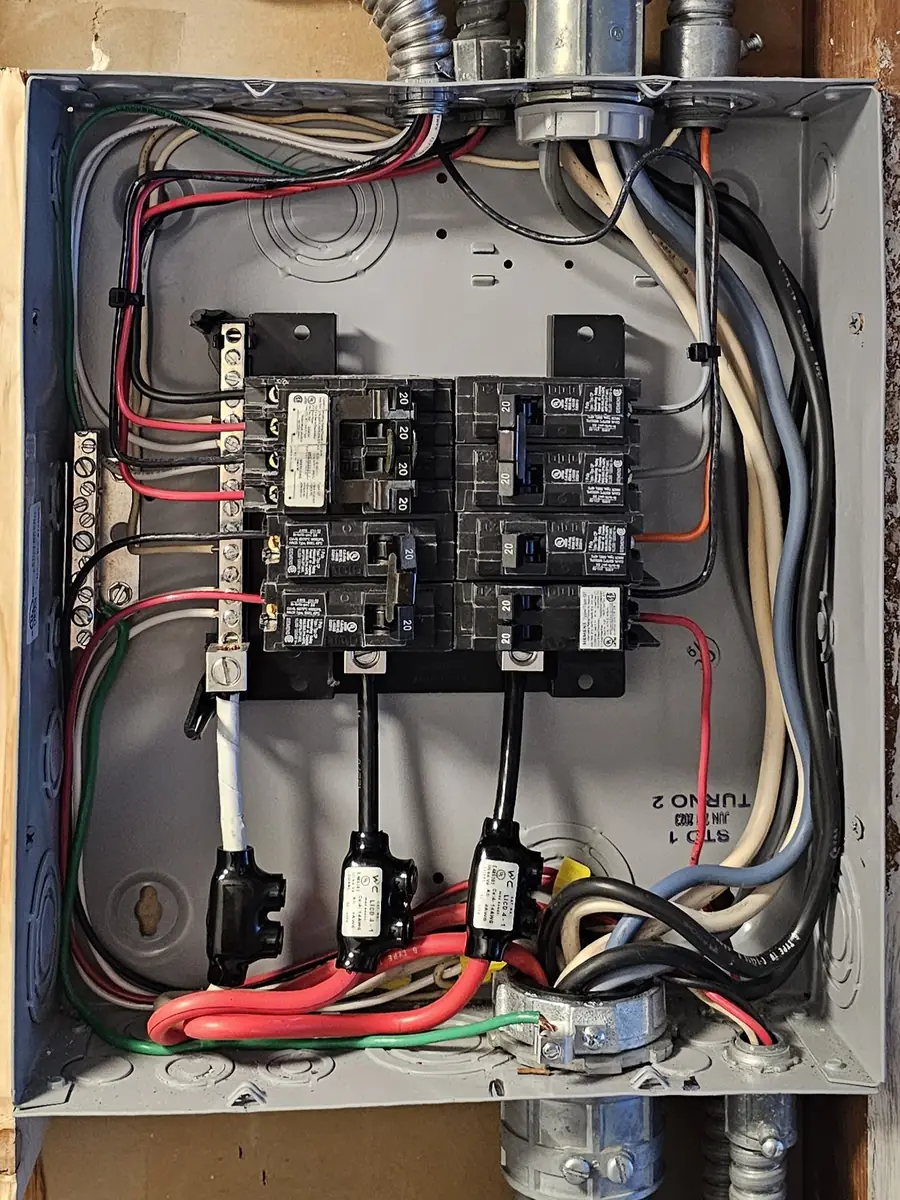
Every day across Los Angeles, homeowners plug in high-draw appliances, fire up air conditioning units, and charge electric vehicles without thinking twice about where that power originates. Tucked away on an exterior wall or in a dusty utility closet sits your breaker box—the central nervous system of your home's electrical infrastructure. When it works, you never notice it. When it deteriorates, the consequences range from inconvenient power interruptions to catastrophic structural fires.
Knowing when to replace electrical panel systems is essential for homeowners in older Southern California neighborhoods. Whether you live in a 1920s Spanish revival in Pasadena, a post-war ranch in Sherman Oaks, or a mid-century home in Glendale, your electrical service was never engineered to handle the load of modern living. Planning a timely electrical panel replacement prevents emergency outages, eliminates fire hazards, and prepares your property for high-efficiency living.
!Licensed electrician working on a residential electrical panel in Los Angeles
Clear Warning Signs Your Electrical Panel Needs Attention
Electrical panels rarely fail overnight without giving subtle warning signs first. The problem is that many property owners mistake these warnings for minor quirks rather than symptoms of serious mechanical and thermal degradation.
1. Circuit Breakers That Trip Constantly or Won't Reset
A circuit breaker trips to cut the flow of electricity when an internal bimetallic strip overheats from excessive amperage. If a breaker trips every time you run the microwave while brewing coffee, your circuit is overloaded. While a single problematic circuit can sometimes be rebalanced, frequent trips across multiple circuits indicate that the main busbars are overwhelmed. Worse, if a breaker trips and refuses to mechanically reset after cooling down, the internal mechanism has likely fused or failed.
2. Physical Heat, Scorching, or the Smell of Burning Plastic
Your breaker panel should always feel cool to the touch. If you rest your palm against the deadfront cover and feel noticeable warmth, call a professional immediately. Heat indicates extreme electrical resistance, loose lug connections, or failing internal contacts. Look for:
- Dark discoloration or soot marks around breaker knockouts.
- Melted insulation along the branch circuit conductors.
- A distinct, pungent fishy or chemical smell near the panel enclosure.
These symptoms represent active electrical arcing—a direct precursor to an attic or wall fire.
3. Strange Sounds: Buzzing, Humming, or Sizzling
Alternating current (AC) naturally produces a very faint 60-cycle vibration, but you should never hear pronounced sounds coming from your panel. A distinct buzzing or crackling noise means an electrical arc is jumping between loose contacts or a breaker's contacts are vibrating under severe thermal stress. Arcing produces temperatures exceeding 10,000°F in fractions of a second, which can quickly ignite surrounding wood framing and stucco backing.
4. Flickering or Dimming Lights Under Sudden Load
When your central air conditioning compressor kicks on during an August heatwave in the San Fernando Valley, do your interior lights briefly dip or flutter? While minor motor inrush current is normal, sustained dimming across multiple rooms indicates that the main electrical service cannot deliver the instantaneous current required by your home. This voltage drop strains sensitive electronics, variable-speed heat pumps, and refrigerator compressors throughout your house.
5. Visible Corrosion and Moisture Intrusion
In coastal and hillside microclimates—from Santa Monica and Venice to the foothills of Burbank—exterior electrical panels endure decades of fog, marine layer moisture, and sun exposure. Inspect the bottom of your panel enclosure. If you spot rust, white powdery oxidation on the aluminum busbars, or water trails inside the gutter space, the structural integrity of your electrical components is compromised. Corroded connections create resistance, resistance creates heat, and heat destroys panels.
Dangerous Outdated Panels Common in Los Angeles
During routine safety inspections across the LA basin, we frequently encounter obsolete equipment that should have been retired decades ago. If your home was built between 1950 and 1990, verify the brand inside your panel door.
- Federal Pacific Electric (FPE) Stab-Lok: Installed in millions of homes nationwide between the 1950s and 1980s. Independent testing has shown that up to one in three FPE breakers fail to trip during sustained overcurrent situations, allowing wires to overheat inside walls.
- Zinsco / Sylvania: Readily identifiable by their brightly colored breaker handles (blue, red, green). The major design defect of Zinsco panels is that the breakers can fuse directly to the aluminum busbar. Even when the handle appears in the "OFF" position, power can continue to flow uninhibited.
- Pushmatic (ITE Bulldog): Uses rectangular push-buttons instead of toggle switches. These mechanical spring-loaded buttons wear out, seize in the "ON" position, and lack modern arc-fault or ground-fault capabilities.
- Screw-In Fuse Boxes: If you still change glass Edison-base fuses, your home is operating on an antiquated 30- to 60-amp service that poses serious insurance and safety liabilities.
Most reputable homeowners insurance carriers operating in California will either refuse coverage or dramatically increase premiums if an FPE or Zinsco panel is present on the property.
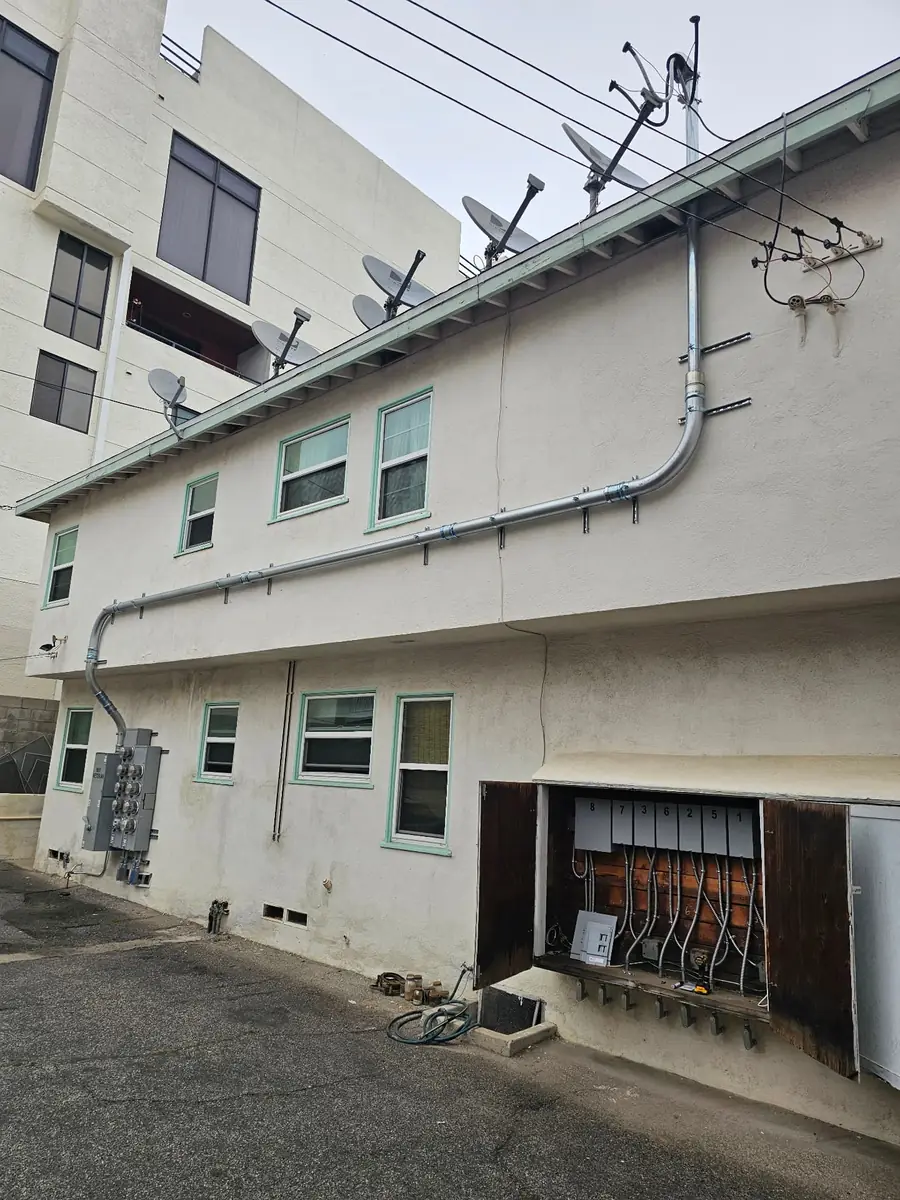
!Electrical service conduit and meter work on a Los Angeles property
When to Replace Electrical Panel: The Evaluation Checklist
Not every electrical issue requires replacing the main service. Use this practical checklist to evaluate your system's current condition:
| Assessment Factor | Safe / Stable | Plan Replacement Soon | Replace Immediately | | :--- | :--- | :--- | :--- | | Panel Age | Under 20 years | 25 to 40 years | 40+ years or obsolete brand | | Service Capacity | 200 Amps | 100–125 Amps | 60 Amps or fuse box | | Breaker Behavior | Rarely trips; resets smoothly | Trips when 2 appliances run | Will not reset; feels hot | | Future Upgrades | Ample empty breaker spaces | Zero spare breaker slots | Tandem breakers doubled up | | Physical Condition | Clean, dry, no rust | Mild surface paint peel | Rust, soot, burnt smells |
If your panel lands in the "Replace Soon" or "Replace Immediately" column, browse our comprehensive electrical services to see how modern code-compliant upgrades are handled.
Why Modern Power Needs Demand an Electrical Panel Upgrade
Even if your existing panel is not visibly burning or tripping, your lifestyle may already exceed its physical threshold. For decades, a 100-amp service was the residential standard. Today, California's aggressive clean energy transitions and lifestyle expectations make 100 amps inadequate.
Consider the simultaneous demands of a modern Southern California household:
- Level 2 EV Charger: 32 to 50 amps dedicated load.
- Central Air Conditioning or Heat Pump: 30 to 50 amps.
- Electric Tankless Water Heater: 50 to 120 amps.
- Induction Cooktop / Range: 40 to 50 amps.
- Accessory Dwelling Unit (ADU): 50 to 100 amps subpanel feeder.
When you attempt to run an EV charger and an A/C compressor simultaneously on an undersized 100-amp panel, the main breaker acts as a severe bottleneck. Completing an electrical panel upgrade to 200 amps—or even 400 amps for larger estates with multiple ADUs—future-proofs your home, safeguards resale value, and complies with Title 24 energy mandates.
Panel Replacement Cost and Permitting Reality in Los Angeles
A critical question for any homeowner is the realistic panel replacement cost. Because every property features a distinct combination of utility overhead service drops, underground trenching requirements, and stucco setbacks, turnkey pricing varies.
In the greater Los Angeles area, a standard residential 200-amp main electrical panel replacement typically ranges between $2,800 and $5,500+, depending on specific site factors:
- Overhead vs. Underground Service: Underground utility pull-sections require trenching, conduit runs, and utility vault coordination, which increases labor and material costs compared to simple overhead mast replacements.
- Utility Coordination (LADBS & DWP / SCE): Replacing a meter-main combo requires coordinated disconnects and reconnects with the local utility provider (such as the Los Angeles Department of Water and Power or Southern California Edison). City permits and municipal inspections (via LADBS or local building departments in Burbank, Glendale, or Culver City) ensure the grounding electrode system and working clearances meet the National Electrical Code (NEC).
- Grounding Infrastructure: Current building codes mandate two driven ground rods spaced at least six feet apart and continuous bonding to the incoming interior metallic water piping system.
- Relocation Requirements: If your existing panel sits directly under a gas meter, inside a bedroom closet, or behind overgrown landscaping without clearance, the utility will mandate relocating the service box to a compliant exterior location.
Attempting unpermitted panel work to save money risks denied insurance claims in the event of an electrical fire and halts real estate transactions during buyer escrow inspections.
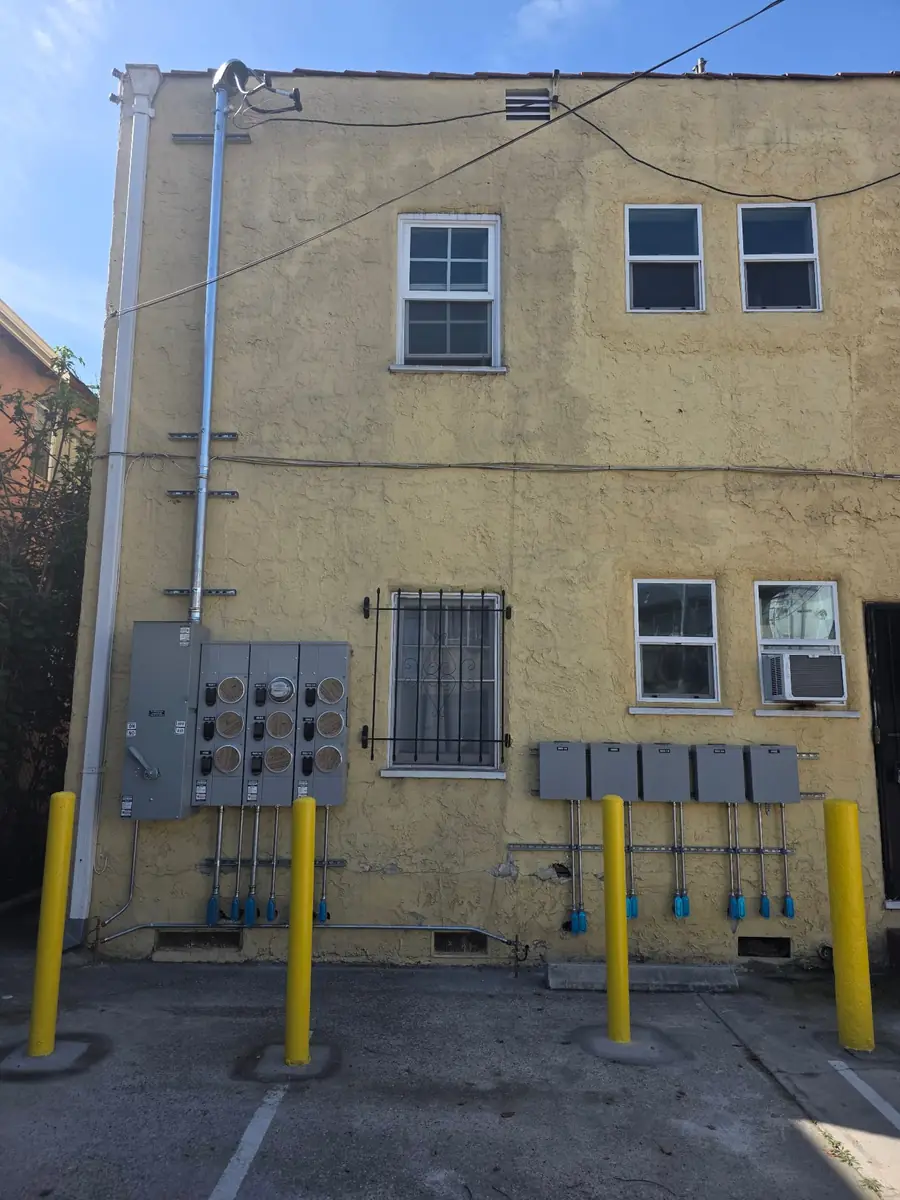
!Commercial meter stack rebuilt by AA Electrical Services
Frequently Asked Questions About Electrical Panel Upgrades
How long does an electrical panel replacement take?
A standard residential electrical panel replacement generally requires one full working day (6 to 8 hours) on-site. Power is temporarily disconnected in the morning while our team tears out the old enclosure, installs the new cabinet, lands all branch circuits, and bonds the grounding system. The city inspector and utility provider then inspect and re-energize the service.
Can I upgrade my panel to 200 amps without utility company approval?
No. Upgrading your service amperage requires the utility provider (LADBS/LADWP or SCE) to calculate the capacity of the distribution transformer serving your street and approve the service drop conductors. Performing an unpermitted, uncoordinated panel upgrade creates a severe fire hazard at the utility connection and violates municipal building codes.
Will my insurance company drop my policy if I have a Zinsco or FPE panel?
Yes, many leading California homeowner insurance carriers routinely flag Federal Pacific Electric and Zinsco panels during risk underwriting surveys. If identified, insurers often issue a non-renewal notice giving you 30 to 60 days to complete a panel replacement by a licensed C-10 electrical contractor.
What is the difference between a subpanel addition and a full panel replacement?
A subpanel simply adds additional breaker spaces fed by your existing main service panel; it does not increase the total electrical capacity flowing into your property from the utility. If your main busbar is already maxed out at 100 amps, adding a subpanel only spreads insufficient power across more circuits. A full main panel replacement increases your property's total amperage capacity.
Protect Your Home and Secure Your Power Today
Your electrical panel should deliver uninterrupted, clean power without strange sounds, scorching, or constant trips. If your panel is showing signs of age or you are planning high-load additions like EV chargers and air conditioning, do not wait for complete component failure to act.
Since 1991, AA Electrical Services has delivered licensed, insured, and code-compliant C-10 electrical solutions throughout Los Angeles, Pasadena, Glendale, Burbank, and surrounding communities. We manage the entire process from city permitting through utility coordination to final inspection.
Call our master electricians directly at (818) 437-6736 or request an estimate online to schedule your on-site service evaluation. If you have questions about commercial systems or multi-family properties, you can also contact our team today.