Lights Flickering in House: Causes & When It's a Hazard
Noticing your lights flickering in house circuits? Learn the common causes, the real danger of a loose neutral, and when to call a Los Angeles electrician.
You are sitting in your living room in Sherman Oaks or Pasadena on a warm summer evening, and suddenly the recessed lights drop to half-brightness for a second before snapping back. Maybe you notice a subtle, rhythmic pulsing in your hallway fixture, or the kitchen lights violently flash whenever your refrigerator compressor kicks on.
Noticing your lights flickering in house circuits is one of the most common calls we receive at AA Electrical Services. Sometimes the culprit is as harmless as a failing LED bulb or a loose screw terminal on a dimmer switch. However, frequent or house-wide flickering often points to serious electrical instability behind your drywall—such as an overloaded circuit, failing panel lugs, or an open connection. When you need professional electrical troubleshooting in Los Angeles, understanding the underlying mechanics can help you determine whether you are dealing with a minor nuisance or an imminent electrical hazard.
Common Causes of Lights Flickering in House Circuits
Electrical current flows along a continuous, closed loop. When something compromises that path or drops the available line voltage, your lighting is the first system to display symptoms. Here is what is typically happening behind the scenes:
1. Incompatible or Failing LED Dimmers
Modern LED fixtures draw a fraction of the wattage that older incandescent bulbs required. If your home still uses older rheostat dimmers designed for 60-watt to 100-watt resistive loads, the low-wattage driver inside modern LEDs will flutter, hum, or flicker intermittently. Replacing the wall switch with a dedicated digital LED-rated dimmer often resolves this immediately.
2. Large Motor Startup (Voltage Drop)
Major appliances like central air conditioning units, heat pumps, EV chargers, and pool pumps draw high inrush current—known as Locked Rotor Amps (LRA)—the moment their motors start. This sudden draw can cause a momentary 1-second dip in voltage throughout that leg of your electrical panel. While a brief, slight flicker can be normal in homes with 100-amp service, lights that dim significantly and stay dim indicate that your electrical service is struggling under modern household demand.
3. Loose Circuit Wiring
With Los Angeles housing stock ranging from 1920s Spanish bungalows in Silver Lake to 1960s mid-century homes in Encino and Glendale, aging branch wiring is everywhere. Over decades, thermal expansion and contraction (heating when current flows, cooling when idle) can loosen screw terminals inside switch boxes, junction boxes, and outlets. A loose wire creates high resistance, sparking (arcing), and erratic flickering.
4. The Dangerous Scenario: A Loose Neutral Wire
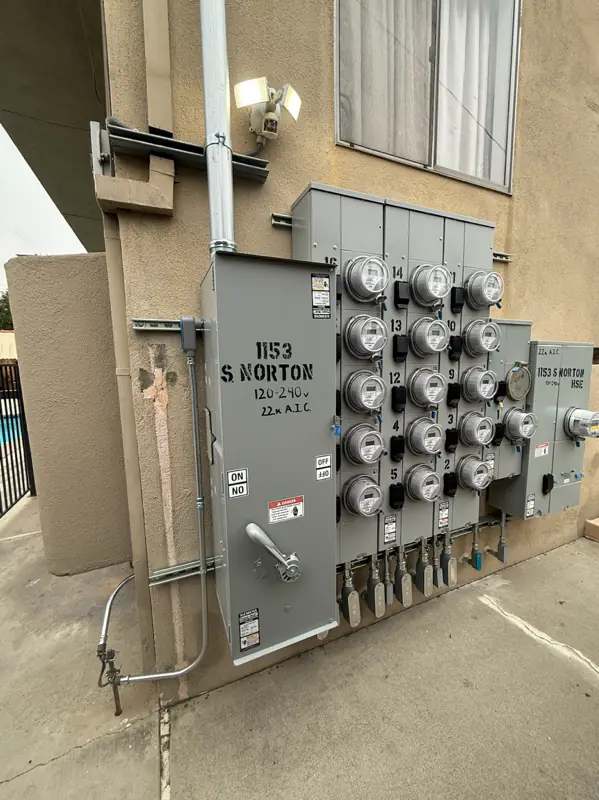
In standard North American residential split-phase electrical systems, your main electrical panel receives two 120-volt legs and one shared neutral wire from the utility (LADWP or Southern California Edison). The neutral wire returns unbalanced current back to the utility transformer.
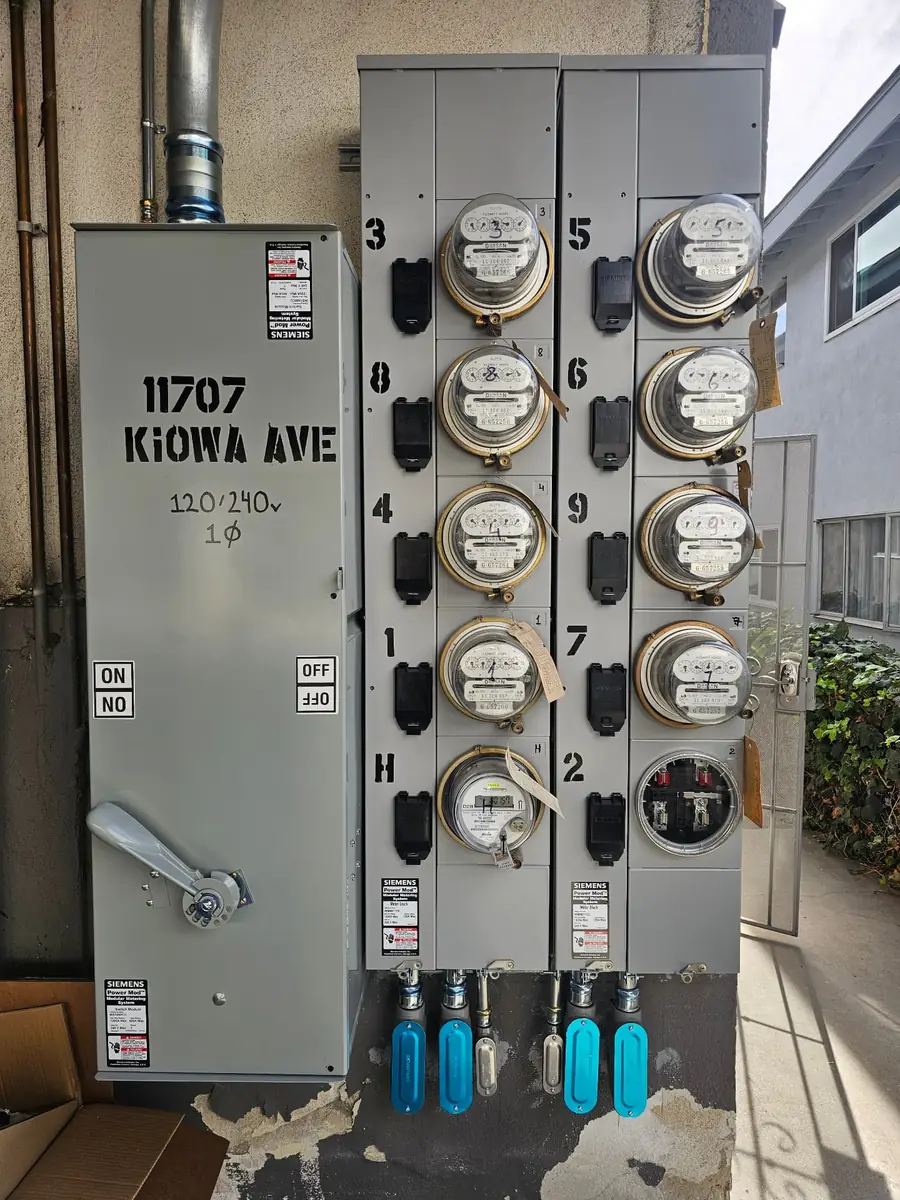
If that neutral wire becomes loose, oxidized, or disconnected—either at the main breaker, inside the meter socket, or at the weatherhead connection—you have a loose neutral. When a neutral opens, 120-volt circuits no longer have a stable return path. Instead, current travels across circuits in series. As a result, lights on one circuit will dim significantly while lights on another circuit flare violently bright, potentially feeding up to 240 volts into sensitive 120-volt electronics and causing immediate component burnout or electrical fire.
Quick Checklist: Harmless Flickering vs. Major Hazard
Use this quick checklist to evaluate what your home is experiencing:
| Symptom | Probable Cause | Urgency Level | | :--- | :--- | :--- | | Single bulb flickers when tapped | Loose bulb or faulty fixture socket | Low: Tighten or replace bulb | | Several lights dim momentarily when the AC starts | Normal inrush voltage dip on 100A-125A panel | Moderate: Consider a hard-start kit or panel upgrade | | One room dims while another room flares intensely bright | Loose neutral on main feeder or panel busbar | Critical: Immediate fire & surge hazard | | Flickering accompanied by buzzing, crackling, or heat | Active arcing inside outlet, switch, or panel | Critical: Shut off circuit breaker immediately | | Flickering persists across all rooms in the house | Utility drop problem, failing main lugs, or corroded service | High: Call a licensed electrician and the utility |
Why You Need a Dimming Lights Electrician: Hidden Dangers
Ignoring flickering lights is a gamble with your home's structural safety and your electronic equipment. When an electrical problem moves beyond a simple light bulb, here is why you need a certified dimming lights electrician to inspect the installation:
- Electrical Arcing and Structure Fires: Loose copper or aluminum connections do not simply lose power; they generate localized heat through micro-arcing. Temperatures at a loose termination can exceed 1,000°F within seconds, igniting framing studs, blown-in attic insulation, or plastic junction boxes.
- Destruction of Smart Appliances and Electronics: A fluctuating neutral conductor causes unpredictable voltage swings. Smart TVs, refrigeration control boards, HVAC thermostats, and computers are designed to handle tight voltage tolerances (+/- 5%). Feeding 160 to 200 volts into a 120-volt motherboard will destroy it instantly.
- Insurance and Disclosure Issues: If an electrical fire originates from unpermitted or unaddressed panel defects that were noted during a prior home inspection or visible on code-compliance records, insurance claim payouts can be heavily complicated.
- Readiness for Heat Pumps and EVs: If your panel cannot keep lights steady under current loads, it cannot safely accommodate the Level 2 EV charger, induction range, or heat pump system required under California's clean energy shift.
Warning Signs You Should Not Wait to Call a Pro
If you live in Los Angeles, Santa Monica, Burbank, or Torrance and observe any of the following symptoms, stop using major appliances and contact a licensed C-10 contractor immediately:
- A persistent "fishy" or hot plastic odor near the panel, outlets, or switch plates.
- Discoloration, brown scorching, or warping on outlet covers or wall switches.
- Breakers that feel hot to the touch or trip repeatedly when lights flicker.
- Appliances behaving erratically, such as digital clocks resetting or microwave displays fading in sync with the room's lights.
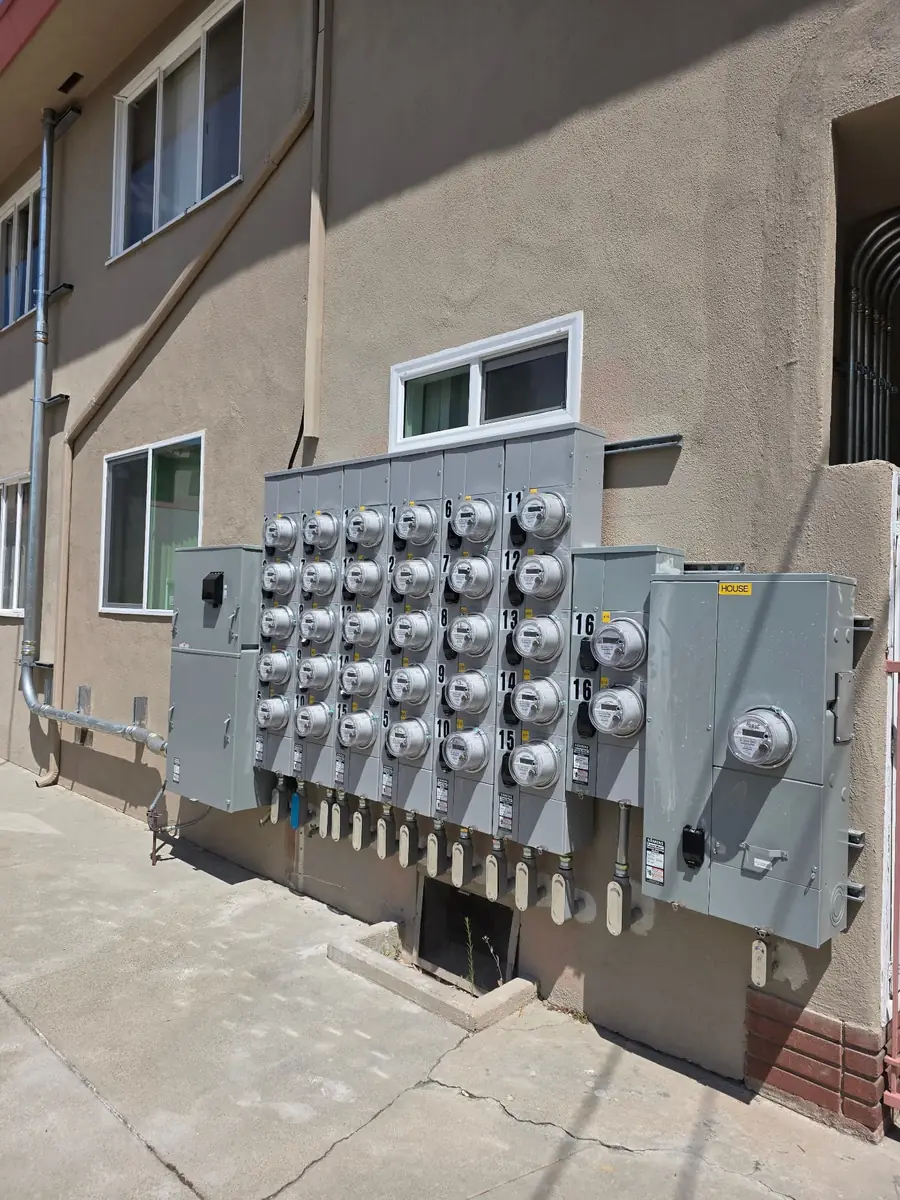
- Flickering across the entire house, which indicates the fault is at the main breaker, meter base, or the overhead service drop connecting your home to the city power grid.
Cost and Permitting Reality for Electrical Repairs in Los Angeles
Homeowners naturally want to know what fixing flickering lights will cost. Because the causes vary from a twenty-minute fix to a major infrastructure replacement, honest pricing depends entirely on what the diagnostic phase reveals:
- Diagnostic Troubleshooting: A basic troubleshooting call in the Los Angeles metro area generally ranges between $175 and $350, covering diagnostic testing with multimeters, thermal cameras, and circuit tracers to isolate the bad connection.
- Minor Repairs (Switches, Outlets, Subpanel Lugs): If the problem is an isolated loose neutral in a junction box, a burned outlet, or a failed breaker, repairs typically run between $250 and $650 including parts and labor.
- Main Service Neutral Repair or Overhead Drop Fix: If the utility connection at the weatherhead is damaged, repairing the service entrance conductors often ranges from $800 to $1,800.
- Full 200-Amp Panel Upgrade: If your panel is outdated (such as an old Zinsco, Federal Pacific, or undersized 60/100-amp service) and the busbars are damaged by arcing, a complete service upgrade typically costs between $3,500 and $6,500+ depending on service drop routing and ground rod installation.
The Permitting Process (LADBS & Surrounding Cities)
Any work involving your main panel, service entrance conductors, or running new dedicated home circuits requires an electrical permit. In the City of Los Angeles, this means pulling a permit with the Los Angeles Department of Building and Safety (LADBS) and scheduling an inspection once the rough or final installation is complete. If you reside in Pasadena, Glendale, or Burbank, permits go through their respective city building divisions and local municipal utilities (PWP, GWP, BWP).
Never let a handyman work inside your main breaker box without a license or permit. Unpermitted service modifications can void homeowners insurance policies and stall future home sales.
Frequently Asked Questions
Why do my lights flicker only when the air conditioner turns on?
When your AC compressor turns on, it requires a massive burst of current to get the motor spinning. In homes with older 100-amp service panels or undersized feeder lines, this instantaneous load causes line voltage to dip for a fraction of a second. If the flicker lasts longer than two seconds, or if lights stay dimmed the entire time the compressor runs, your panel is overloaded or the wiring between your panel and the condenser is undersized.
Can a flickering light cause a house fire?
Yes, if the flickering is caused by a loose wire or arcing connection. Electricity jumping across an air gap creates extreme heat. According to the National Fire Protection Association (NFPA), arcing faults are a primary cause of home electrical fires. If your lights flicker in conjunction with buzzing noises, warm wall plates, or a burning odor, treat it as an emergency.
Does LADWP or Southern California Edison fix a loose neutral?
It depends on where the break is located. If the neutral wire fails on the utility side—between the street transformer and the weatherhead/splice on your roof or underground pull box—the utility company (LADWP or SCE) is responsible for the repair at no cost to you. However, if the loose neutral is on your side of the service point (inside the meter can, main breaker panel, or branch circuits), repairs must be made by a licensed private C-10 contractor.
How long does electrical troubleshooting take in an older LA home?
Most diagnostic evaluations take between 60 and 90 minutes. Older Los Angeles homes often feature complex modifications, including knob-and-tube extensions or shared neutrals installed across several decades of previous renovations. An experienced technician uses thermal imaging and voltage-drop testers to systematically isolate the problem without opening unnecessary walls.
Protect Your Home with Professional Troubleshooting
Flickering lights should never be a mystery you learn to live with. Whether your home needs a simple branch junction repair, a dedicated circuit, or an updated service panel to meet modern electrical demands, our experienced team is here to help.
AA Electrical Services has been diagnosing complex electrical problems across Los Angeles, Culver City, Burbank, and the San Fernando Valley since 1991. We provide code-compliant, permit-ready solutions that protect your property and family.
- Ready to solve your electrical issues? Schedule a thorough inspection or request an estimate today.
- Have questions about your panel capacity? Learn more about our panel upgrades and residential services or contact our office directly.
- Need immediate assistance? Call our team today at (818) 437-6736 to speak with a licensed electrician.