
GFCI Outlet Installation & AFCI Breakers: LA Guide
Learn where electrical code requirements demand GFCI and AFCI protection in Los Angeles homes, how they stop shocks and fires, and when to upgrade your system.
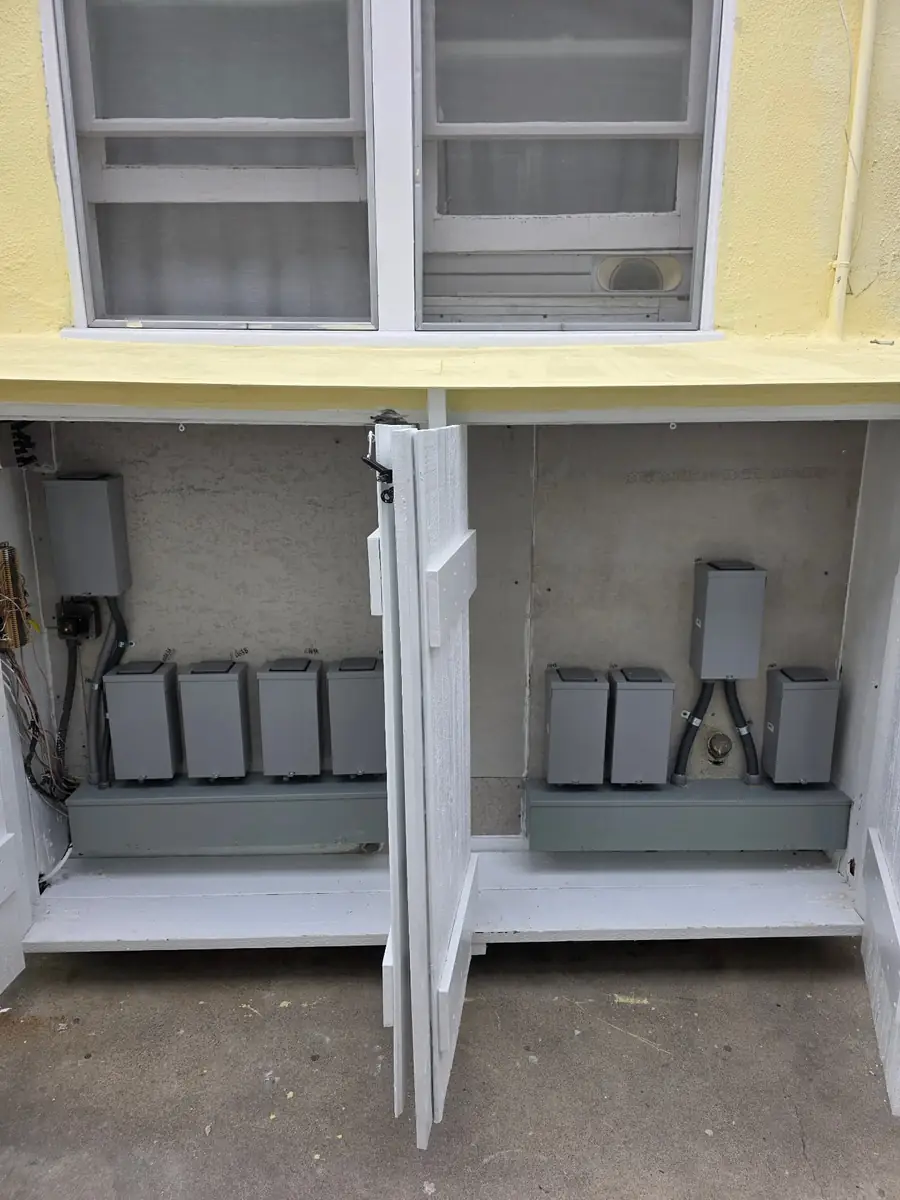
If you live in Los Angeles, there is a strong chance your home was built before modern electrical safety standards existed. From 1920s Spanish bungalows in Pasadena and Silver Lake to 1950s ranch homes in the San Fernando Valley, thousands of properties still operate on outdated wiring. Today, proper gfci outlet installation and modern arc-fault protection are not just bureaucratic checkmarks—they are your primary defense against lethal electrocution and catastrophic structural fires.
Every year, residential electrical failures cause over 40,000 home fires nationwide. The National Electrical Code (NEC) and the California Electrical Code have evolved aggressively over the past three decades to eliminate these hazards. Understanding where these devices belong, how they work, and what it means when you find an outlet not working can save your property and your family's lives.
The Difference Between GFCI and AFCI Protection
Many homeowners treat Ground Fault Circuit Interrupters (GFCIs) and Arc Fault Circuit Interrupters (AFCIs) as interchangeable safety buzzwords. They are completely different technologies designed to combat two entirely separate hazards.
Ground Fault Circuit Interrupters (GFCI): People Protection
A ground fault happens when electrical current escapes its intended path (hot and neutral wires) and seeks an alternate route to the ground. If you are holding a hair dryer in a bathroom with wet hands, that alternate path could be through your heart.
A GFCI constantly monitors the balance of current moving between the ungrounded (hot) and grounded (neutral) conductors. If it detects a discrepancy as tiny as 4 to 6 milliamperes, it cuts the power in as little as 25 milliseconds (1/40th of a second). That split-second reaction is fast enough to stop a lethal shock.
Arc Fault Circuit Interrupters (AFCI): Property Protection
An arc fault occurs when current unintentionally jumps across an air gap between damaged conductors or loose terminals. This can happen when a picture nail punctures Romex inside a drywall cavity, when an appliance cord gets crushed under heavy furniture, or when an aging terminal screw loosens behind an outlet.
Standard thermal-magnetic breakers only trip when current exceeds their amp rating (like 15 or 20 amps) or when a direct short happens. Arcing, however, creates intense heat—often reaching over 10,000°F—without necessarily pulling enough sustained current to trip an old standard breaker. An afci breaker utilizes sophisticated microprocessors to analyze the wave patterns of current. When it detects the erratic signature of dangerous electrical arcing, it trips instantly before the framing lumber inside your wall ignites.
Quick Comparison: GFCI vs. AFCI
| Feature | GFCI (Ground Fault) | AFCI (Arc Fault) | | :--- | :--- | :--- | | Primary Goal | Prevents human electrocution | Prevents electrical structure fires | | Trigger | Current leakage to ground (4–6 mA) | Erratic arcing wave patterns | | Where Required | Wet, damp, and outdoor areas | Living areas, bedrooms, hallways | | Installation Type | Specialized receptacle or breaker | Breaker in panel (or specialized dead-front) | | Life Expectancy | Typically 7–10 years | Typically 10–15 years |
Current Electrical Code Requirements in Los Angeles
The City of Los Angeles Department of Building and Safety (LADBS) and surrounding municipal departments in Glendale, Burbank, and Santa Monica enforce the California Electrical Code (Title 24, Part 3), which is based on the latest revisions of the NEC. If you pull permits for a kitchen remodel, room addition, or electrical service panel upgrade, you are required to bring affected circuits up to current standards.
Where GFCI Protection Is Legally Required
GFCI protection is mandatory in any location where electricity and moisture are likely to interact. Code mandates GFCI coverage for:
- Bathrooms: All receptacles, without exception.
- Kitchens: All receptacles serving countertop surfaces, plus any outlet within 6 feet of the top inside edge of the sink bowl.
- Outdoors: All exterior 125-volt, single-phase 15- and 20-amp receptacles (must also have weather-resistant WR ratings and in-use "bubble" covers).
- Garages and Accessory Buildings: Workbenches, general-use outlets, and vehicle bays.
- Laundry Rooms: Any receptacle installed within 6 feet of a laundry sink or washing machine connection.
- Crawl Spaces & Unfinished Basements: Every general lighting or convenience outlet.
- Wet Bars & Sump Pumps: Any outlet located within 6 feet of a sink basin.
Where AFCI Protection Is Legally Required
Since the late 2000s, AFCI requirements have expanded from just bedrooms to virtually every occupied room in a residential home. Today, California electrical code requirements mandate AFCI protection for all 15A and 20A branch circuits supplying outlets in:
- Bedrooms and master suites
- Living rooms, family rooms, and dens
- Dining rooms and breakfast nooks
- Hallways, closets, and stairways
- Home offices and libraries
- Kitchens and laundry areas (often requiring dual-function AFCI/GFCI breakers)
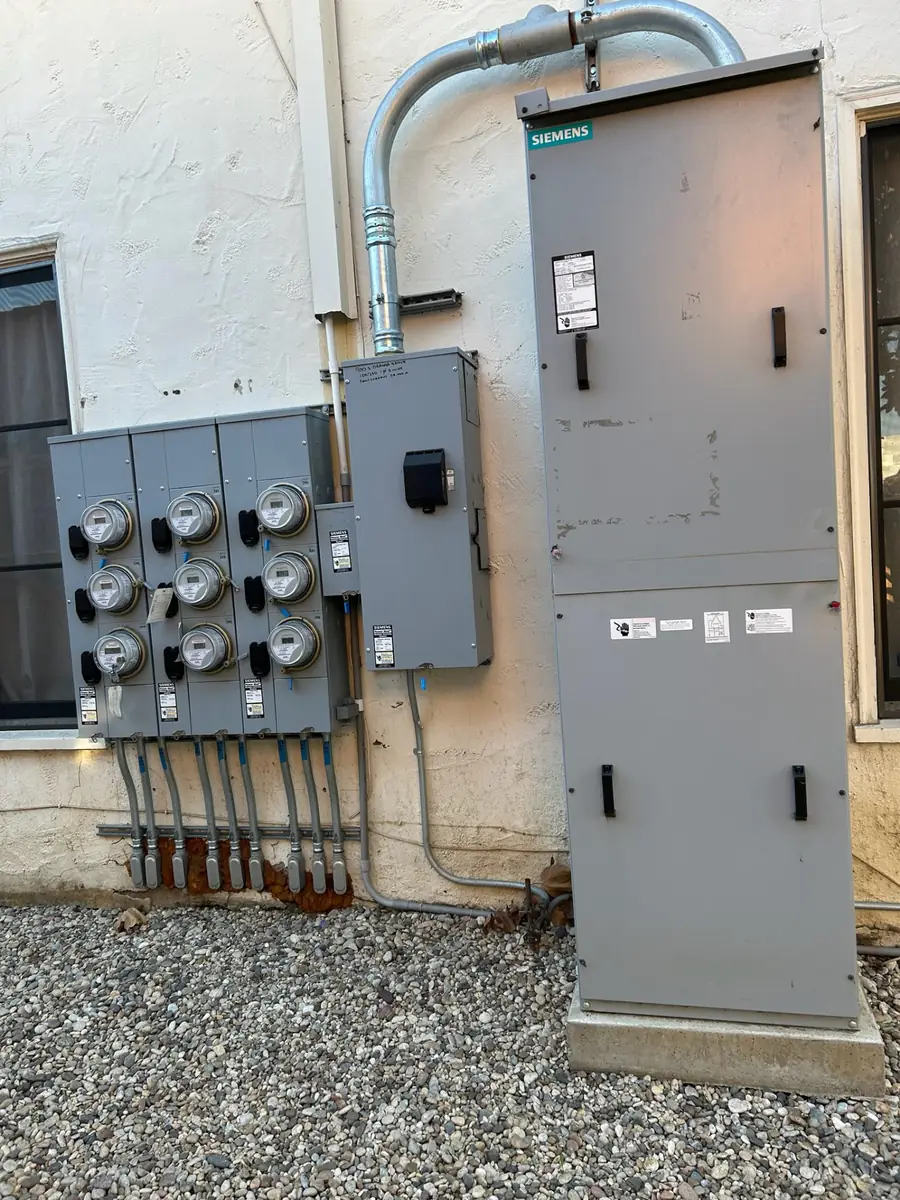
Why Unprotected Older Homes Fail Modern Realities
Many Los Angeles homes built in the mid-20th century were wired with ungrounded cloth-sheathed wiring or old metallic conduit systems designed to run a refrigerator, a few incandescent lamps, and a radio.
Today, homeowners plug in high-wattage air fryers, multi-screen home offices, portable AC units, and EV chargers. When you put that kind of continuous electrical load on 50-year-old connections, loose connections heat up. Without an afci breaker in the panel, that heat smolders inside insulation and wood framing undetected.
Furthermore, ungrounded two-prong outlets leave modern three-prong computers and appliances vulnerable. While code allows a professional gfci outlet installation on an ungrounded circuit to provide human shock protection (labeled "No Equipment Ground"), it does not provide surge grounding for sensitive microelectronics. A comprehensive inspection can determine whether targeted outlet retrofits or full circuit rewiring is necessary.
Signs You Should Not Wait to Update Your Protection
Electrical systems give warnings before catastrophic failures happen. If you notice any of the following symptoms, your system requires professional evaluation:
- Frequent "Outlet Not Working" Calls: If a circuit dead-ends unexpectedly or you have an outlet not working in the kitchen or master bath, downstream connections may be burned, or a hidden upstream GFCI has failed.
- Warm or Discolored Faceplates: Receptacles that feel hot to the touch or show slight yellowing or brown scorch marks around the slots have active arcing occurring behind the plate.
- Buzzing or Sizzling Sounds: Any audible vibration when you plug in an appliance indicates a loose terminal screw or failing contacts inside the wall box.
- Ungrounded Two-Prong Outlets: If your home still has two-prong outlets near sinks, outdoors, or in garages, you are operating with zero ground-fault protection.
- Breakers That Will Not Reset: When a breaker immediately snaps back to the center "tripped" position, it is actively sensing a direct short, ground fault, or arc fault. Never force a breaker to stay in the ON position.
Costs, Permits, and LADBS Inspection Realities
Upgrading protection is one of the most cost-effective investments a homeowner or landlord can make, but prices vary depending on the existing infrastructure.
Component and Installation Costs
- Receptacle-Level GFCI Replacement: Swapping existing, grounded outlets for heavy-duty commercial-grade GFCI receptacles typically ranges from $150 to $350 per location, including professional testing, pigtailing, and verification of upstream/downstream loads.
- AFCI/GFCI Dual-Function Breakers: Installing modern safety breakers in your main panel generally costs between $250 and $550 per circuit, depending on panel accessibility, brand compatibility (Square D, Eaton, Siemens), and wire condition.
- Shared-Neutral (Multi-Wire Branch Circuit) Corrections: Older homes often share neutrals between two circuits. Standard AFCI breakers will trip continuously on shared neutrals. Diagnosing and separating these circuits or installing specialized two-pole AFCI breakers can add troubleshooting labor to the project.
Permitting Requirements
Replacing an individual damaged outlet like-for-like generally does not require a formal permit. However, adding new circuits, performing panel changes, or rewiring extensive branch circuits requires a permit and inspection from the Los Angeles Department of Building and Safety (LADBS) or your local city building division (such as Beverly Hills, Culver City, or Burbank). An inspection ensures your system complies with current California codes, protects your homeowner's insurance validity in the event of a fire claim, and provides documented proof of safety during home sales.
Frequently Asked Questions
Why does my AFCI breaker trip when I plug in my vacuum cleaner or treadmill?
Older motors, treadmills, and certain vacuum cleaners generate tiny, harmless electrical sparks inside their internal brush assemblies during normal operation. Older first-generation AFCI breakers sometimes misread these operational motor sparks as dangerous structural arcs (nuisance tripping). A licensed electrician can test the circuit to confirm whether the issue is a genuine wiring flaw or an older breaker that needs replacement with a modern, digitally filtered arc-fault unit.
Can I install a GFCI outlet on an old ungrounded two-wire system?
Yes, the National Electrical Code specifically allows this under Section 406.4(D)(2). Installing a GFCI on an ungrounded circuit provides full shock and electrocution protection to humans because the GFCI measures current differential, not ground-wire return. However, the outlet must be marked with the provided sticker reading "No Equipment Ground." It will protect your life, but it will not provide an equipment ground path for surge protectors or sensitive electronics.
What should I check first when an outlet is not working in the bathroom or kitchen?
Before assuming your wiring has burned out, look for a tripped GFCI outlet in that room or an adjacent area. In many homes built in the 1970s through 1990s, electricians wired multiple bathrooms or outdoor outlets in series off a single master GFCI located in the garage or powder room. Push the "Reset" button firmly on all visible GFCI units. If the button will not stay depressed, or if you reset all units and still have an outlet not working, call a professional to trace the fault safely.
Do I need to replace every outlet in my house with an AFCI outlet?
No. The most efficient and cost-effective way to achieve whole-home arc-fault compliance is by installing AFCI breakers directly inside your main electrical panel. A single afci breaker installed at the panel protects the entire length of the branch circuit wire running through your walls, ceilings, and every outlet connected downstream.
Protect Your Los Angeles Property Today
Whether you are updating a vintage craftsman home, preparing a rental unit for compliance, or dealing with persistent electrical issues, safety should never take a backseat. AA Electrical Services has served Los Angeles, Burbank, Glendale, Pasadena, and the San Fernando Valley with honest, licensed C-10 craftsmanship since 1991.
Don't wait for a burning smell or an emergency to take action. Call our experienced master technicians today at (818) 437-6736, explore our complete range of residential electrical services, or contact us online to schedule an on-site diagnostic. You can also request a detailed estimate directly through our website.