
Circuit Breaker Keeps Tripping? Causes & LA Repair Guide
Wondering why your circuit breaker keeps tripping? Learn the four common causes, how an electrician diagnoses the fault, and when you need breaker replacement in Los Angeles.
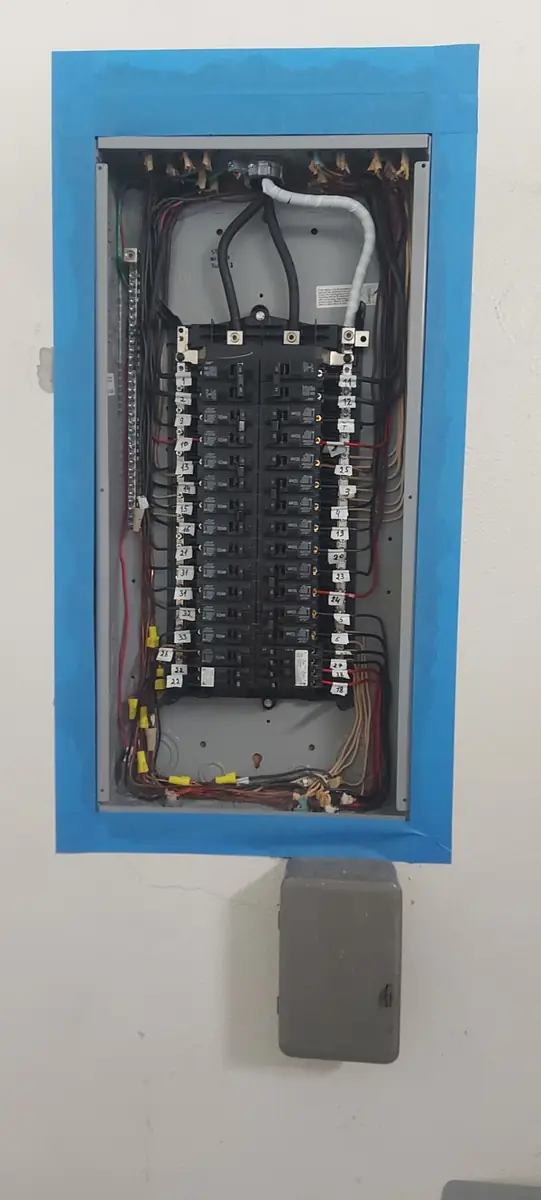
You walk over to your electrical panel in the hallway or garage, push the little black switch back to "ON," and ten minutes later you are standing in the dark again. If your circuit breaker keeps tripping, your home's electrical system is actively trying to protect you from an electrical fire. Breakers do not trip to annoy you—they trip because heat, excess current, or a dangerous fault is threatening the wiring inside your walls.
At AA Electrical Services, we have handled thousands of calls for electrical repair in Los Angeles and neighboring communities like Glendale, Burbank, and Pasadena since 1991. Here is a breakdown of what that persistent click means, how a licensed C-10 electrician pinpoints the root cause, and what steps you must take to keep your property safe.
4 Common Tripping Breaker Causes
When a circuit shuts down repeatedly, one of four distinct electrical issues is almost always behind it. Understanding these tripping breaker causes helps you determine whether you are dealing with a minor load issue or an immediate safety hazard.
1. Circuit Overload
This is the most common reason a breaker trips in older Los Angeles homes. A standard branch circuit provides either 15 or 20 amps of electricity. If you run a 1,500-watt space heater, a hair dryer, and a portable AC unit on the same 15-amp circuit in your Studio City craftsman or Santa Monica apartment, you pull more current than the copper conductor is rated to carry. The internal bi-metallic strip in the breaker heats up, bends, and triggers the mechanism to kill the power before the wiring melts inside the stud bays.
2. Short Circuit
A short circuit occurs when a hot wire touches a neutral wire, creating an unintended path with virtually zero resistance. This triggers an instantaneous spike in amperage—sometimes hundreds of amps—forcing the breaker's magnetic trip mechanism to disengage instantly. Short circuits produce a distinct popping sound, a visible spark at an outlet, or a faint smell of ozone. They often stem from loose screw terminals, rodent damage in crawlspaces, or compromised appliance cords.
3. Ground Fault
A ground fault is a specific type of short circuit where a hot wire contacts a ground wire, a bare metal junction box, or moisture. This frequently happens in outdoor circuits, kitchens, bathrooms, and garages. In damp conditions—like an unsealed exterior patio receptacle after a winter storm in the San Fernando Valley—water conducts current to the ground, triggering GFCI devices or standard breakers.
4. Arc Faults and Aging Breakers
Arc-fault circuit interrupter (AFCI) breakers detect sparking or arcing across compromised wire strands (such as a wire pinched by a picture hanger). However, the breaker itself can also simply wear out. Breakers are mechanical devices with springs and contacts. After 25 to 40 years—or after being repeatedly reset under heavy loads—the internal spring weakens. The breaker then trips far below its rated ampacity, indicating it is time for a breaker replacement.
Why Your Circuit Breaker Keeps Tripping: How a C-10 Electrician Diagnoses It
Resetting a breaker over and over is dangerous. If the breaker fails to trip on the tenth attempt due to mechanical fatigue, that heat stays inside the panel and wall cavity. When our team inspects a tripping circuit, we follow a rigorous diagnostic sequence:
- Panel and Bus Bar Inspection: We remove the deadfront cover to check for signs of pitting, rust, discoloration, or melting along the bus bar contacts. Panels from obsolete manufacturers (like Zinsco or Federal Pacific Electric) frequently exhibit burned connection clips.
- Clamp Meter Amperage Reading: We turn on the normal appliances sharing that branch and clamp a digital multimeter around the hot conductor to measure actual current draw under load.
- Insulation Resistance (Megohmmeter) Testing: If a short or ground fault is suspected, we isolate the circuit and run a high-voltage test to measure the integrity of the Romex or cloth-sheathed insulation behind the plaster.
- Terminal Torque Checks: Thermal expansion and contraction over decades cause screw terminals on the breaker and neutral bar to loosen. Loose connections create extreme local heat that mimics an electrical overload.
Quick Comparison: Overload vs. Short Circuit vs. Ground Fault
| Issue Type | Typical Symptoms | Speed of Trip | Immediate Danger Level | | :--- | :--- | :--- | :--- | | Overload | Breaker trips after 5–20 minutes of running appliances | Gradual (Thermal) | Moderate (Heat buildup) | | Short Circuit | Breaker trips instantly with an audible pop or flash | Instant (Magnetic) | High (Fire risk, wire damage) | | Ground Fault | Breaker or GFCI trips instantly near wet or exterior locations | Instant | Extreme (Shock/Electrocution hazard) | | Failing Breaker | Trips with little or no electrical load attached | Variable | Moderate to High (Unreliable safety) |
Signs You Should Not Wait to Call an Electrician
Some breaker trips can be resolved simply by moving your toaster or space heater to another counter on an independent circuit. However, several symptoms indicate that you need immediate professional contact with an electrical contractor:
- The breaker feels distinctly hot to the touch.
- You notice a persistent fishy, sulfur-like, or burning plastic odor near the panel board.
- There is buzzing, hissing, or sizzling coming from the service enclosure.
- The breaker switch feels "spongy" and refuses to lock firmly into the "ON" or "OFF" position.
- Lights on other circuits flicker or dim when heavy equipment (like your refrigerator compressor or pool pump) starts up.
Delaying service can lead to ruined appliance control boards, burned service cables, denial of homeowner insurance claims for unpermitted/neglected hazards, and structure fires.
Breaker Replacement Costs and Permitting in Los Angeles
Homeowners naturally want to know what fixing a tripping breaker costs. Pricing depends heavily on whether the issue is an isolated mechanical part or a broader capacity shortfall:
- Single Breaker Replacement: Replacing a standard 15A or 20A single-pole breaker typically ranges from $175 to $350, including diagnostic labor and parts. Dedicated AFCI or dual-function breakers cost slightly more for the hardware.
- Adding a Dedicated Circuit: If your breaker trips because modern lifestyle demands (such as an EV charging station, induction stove, or sub-zero refrigerator) exceed panel capacity, we must pull a new line. Running a dedicated 20A to 50A circuit generally runs between $450 and $1,200, depending on distance, crawlspace access, and wall materials.
- Full Panel Upgrade: If your main breaker panel is a 60-amp or 100-amp unit packed with tandem breakers, you may require a 200-amp service modernization. These projects typically range from $2,800 to $5,500+.
Permit Realities (LADBS & Local Municipalities)
In the City of Los Angeles, simple breaker swaps do not typically require a permit. However, adding new branch circuits, running subpanels, or upgrading the main service panel requires an electrical permit from the Los Angeles Department of Building and Safety (LADBS) or the equivalent building department in cities like Burbank or Beverly Hills. AA Electrical Services handles all permit applications, utility coordination with LADWP or Southern California Edison (SCE), and on-site city inspections to ensure your property remains 100% compliant and fully insurable.
Frequently Asked Questions
Can I just swap my 15-amp breaker for a 20-amp breaker to stop it from tripping?
Never do this. The breaker's amp rating is matched to the gauge of the wire inside your wall. Standard 15-amp circuits use 14-gauge copper wire. If you put a 20-amp breaker on 14-gauge wire, the wire will overheat and catch fire long before the breaker trips. Breakers protect the wire, not the appliance.
How many times can a circuit breaker trip before it is ruined?
While modern molded-case circuit breakers can technically withstand several dozen operational trips under moderate overload, severe dead-short faults can degrade the contacts after just a few high-current events. If a breaker has tripped multiple times under heavy load or feels physically loose, it should be tested and replaced.
Why does my breaker trip only when the AC and microwave run together?
Both central AC condensing units and microwaves draw substantial current. In older properties around Los Angeles, circuits were frequently cross-wired or tapped into shared junction boxes decades ago. When both high-draw appliances call for power at the same time, the combined continuous and inrush current exceeds the circuit limit.
How long does a breaker diagnosis and repair take?
Most residential diagnostic calls take between 45 and 90 minutes for an experienced electrician to trace the fault using specialized meters. A straightforward breaker replacement can usually be completed on the spot during the initial service visit.
Stop Guessing with Your Home's Electrical Safety
Resetting the same breaker every day is not a permanent solution—it is a warning sign. Protect your family, prevent costly appliance damage, and restore reliable power to your property.
Call AA Electrical Services today at (818) 437-6736 or request an inspection online to get an estimate. Our licensed C-10 electricians have served homeowners and businesses throughout Los Angeles, Sherman Oaks, and the entire Valley with honest pricing and lasting repairs since 1991.