Electrical Fire Warning Signs: Burning Smells & Hot Outlets
Notice a burning smell from an electrical outlet, a hot switch, or a buzzing panel? Learn the critical warning signs of an electrical fire and how to act fast.
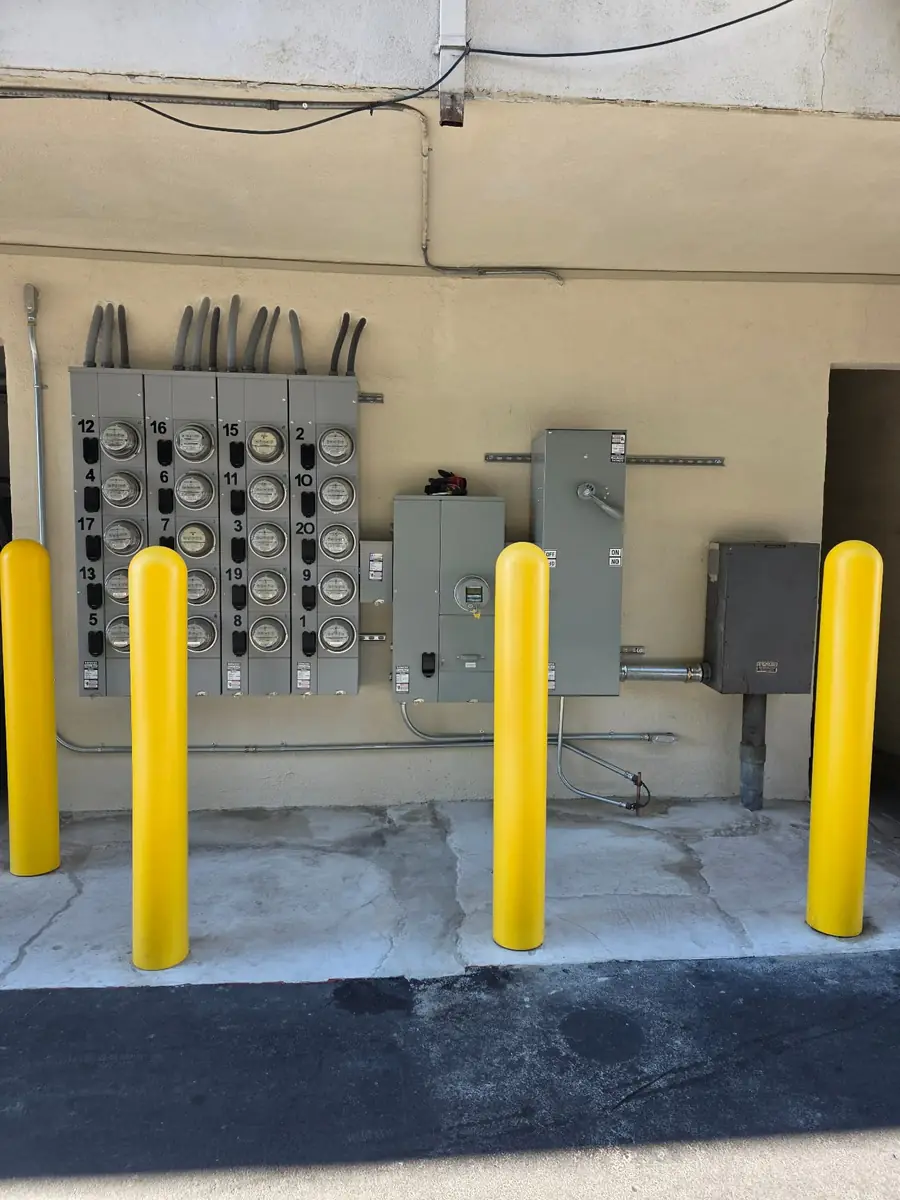
Every year, thousands of residential fires across the United States trace back to damaged wiring, overloaded circuits, and obsolete distribution panels. In a city like Los Angeles, where charming 1920s Spanish bungalows in Silver Lake sit alongside Mid-Century ranches in Encino, electrical infrastructure often operates far beyond its intended lifespan. If you notice a burning smell from an electrical outlet, touch a wall plate and find a hot outlet, or hear a buzzing electrical panel, your home is sounding an urgent alarm. Recognizing these critical electrical fire warning signs early can protect your family, safeguard your property, and prevent devastating fire damage.
1. Burning Smell from an Electrical Outlet: What Is Actually Melting?
Electricity generates heat whenever it meets resistance. Under normal circumstances, copper wiring safely carries current within its rated ampacity without breaking down. But when a connection loosens, wires corrode, or an outlet draws more amperage than its gauge can handle, resistance spikes.
The burning plastic, fishy, or chemical odor you smell is the physical combustion of the receptacle's phenolic resin, PVC wire insulation, or the surrounding drywall and wood framing.
Loose Wire Terminations and "Back-Stabbed" Receptacles
Many tract homes built across the San Fernando Valley and Glendale during the 1970s and 1980s used push-in "back-stabbed" connections behind outlets. Over decades of heating and cooling cycles, these spring-loaded clips lose their mechanical tension. The resulting microscopic gap allows electricity to jump across the air—a phenomenon known as electrical arcing. Arcing can reach temperatures exceeding 1,000°F in fractions of a second, easily charring outlet housings and stud cavities.
Overloaded Branch Circuits
If your home office or kitchen runs a space heater, an air fryer, and a modern computer workstation on a single 15-amp branch circuit, the conductor stays continuously hot. If the circuit breaker fails to trip due to age or mechanical wear, the wire insulation cooks from the inside out, emitting that telltale acrid burning smell.
2. Why a Hot Outlet Demands Immediate Attention
Outlets should never feel warm to the touch. While certain solid-state electronic dimmers or heavy transformer blocks may feel barely lukewarm during peak use, a standard duplex outlet or switch plate that is noticeably warm or hot indicates a serious electrical fault.
What Causes a Hot Outlet?
- High-Resistance Faults: Dust, paint overspray, loose terminal screws, or worn interior brass contacts prevent clean electrical flow, turning the outlet itself into a makeshift heating element.
- Undersized Conductors: Older Los Angeles properties frequently feature 14-gauge wiring paired with 20-amp breakers by well-meaning but unqualified handymen. When overloaded, the wire becomes dangerously hot without tripping the breaker.
- Aluminum Branch Wiring: Homes built between 1965 and 1973 in communities like Northridge, Torrance, and Woodland Hills often have aluminum branch circuit wiring. Aluminum expands and contracts far more than copper, loosening connections at outlet screws and causing severe thermal runaway.
If you discover an outlet that is hot to the touch, unplug any connected appliances immediately, turn off the corresponding breaker in your panel, and schedule an inspection through our comprehensive electrical services.
3. The Dangerous Hum: Diagnosing a Buzzing Electrical Panel
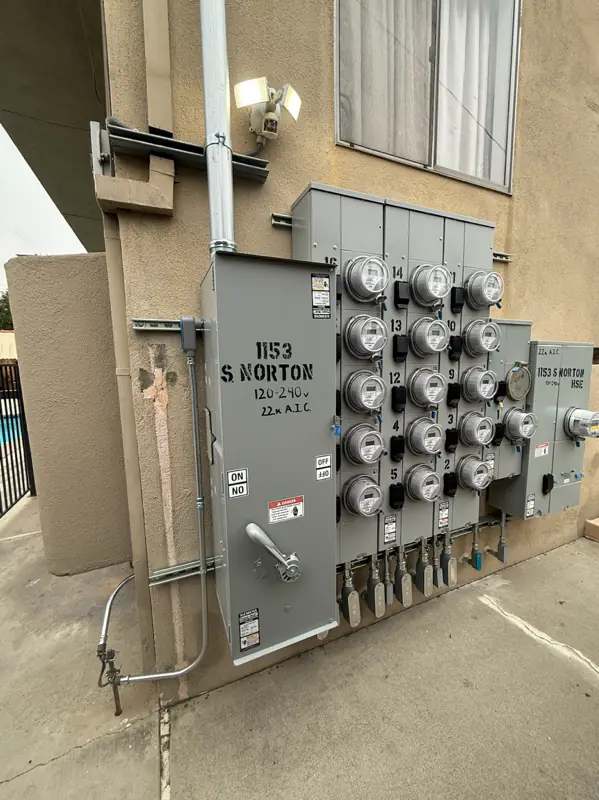
A healthy circuit breaker panel operates silently, save for a very faint, low-level 60 Hz operational hum when under high loads. However, if your breaker box produces a loud buzz, sizzle, or clicking noise, internal failure is underway.
Normal Operational Hum vs. Dangerous Buzzing
Use this quick checklist to evaluate what your electrical panel is doing:
| Observation | Likely Cause | Urgency Level | | :--- | :--- | :--- | | Barely audible, steady low hum | Normal alternating current vibration under moderate load | Normal / Monitor | | Loud, persistent buzzing or vibration | Overloaded circuit breaker that has failed to trip mechanically | Immediate: Shut off main breaker | | Sizzling, snapping, or frying sound | Active arcing between a breaker and the panel bus bar | Critical Emergency: Evacuate & call a pro | | Rhythmic clicking or popping | Breaker repeatedly trying and failing to interrupt a fault | High: Switch off affected breaker |
Damaged Bus Bars and Obsolete Panels
A buzzing electrical panel often stems from a breaker that has lost its secure grip on the hot bus bar. The continuous micro-arcing pits and corrodes the metal bus bar until the panel cannot seat breakers securely. Furthermore, older homes throughout Los Angeles, Pasadena, and Culver City may still house obsolete panels—such as Federal Pacific Electric (FPE) Stab-Lok, Zinsco, or Sylvania panels—notorious for failing to trip during overcurrent events, directly causing structural fires.
Subtle Electrical Fire Warning Signs Homeowners Overlook
Fires rarely start without precursor symptoms. Long before smoke appears, your home's electrical network displays early warning indicators:
- Flickering or Dimming Lights: When your refrigerator or central AC kicks on and the hallway lights dip substantially, your service entrance wires or main panel connections may be loose or deteriorating.
- Discolored or Scorch-Marked Wall Plates: Brown, black, or melted plastic around outlet slots proves that electrical arcing has already occurred.
- Frequent Unexplained Breaker Trips: Breakers do not trip nuisance-style for no reason. Constant tripping indicates an overloaded circuit, a short circuit, or a failing thermal-magnetic trip mechanism inside the breaker.
- Tingling Sensation on Appliances: If you feel a mild shock or tingle when touching a toaster, stove, or metal plumbing fixture, you have an active ground fault, meaning stray voltage is searching for a path to ground through your appliances.
Why Delaying Electrical Repairs in Los Angeles Costs You More
Postponing electrical repairs is never a cost-saving strategy; it is a high-stakes gamble with safety, insurance coverage, and building equity.
1. Insurance Coverage and Claim Denials
California homeowners insurance carriers have grown increasingly strict. If an electrical fire ignites and forensic investigators determine that unpermitted work or ignored structural hazards (like an obsolete Zinsco panel or burnt wiring) caused the blaze, insurers may limit or challenge your payout. Proactive upgrades protect your policy standing.
2. High Demands from Modern Electric Loads
Between whole-home heat pump HVAC systems, dual Level 2 EV chargers, and induction ranges, today's electrical usage dwarfs that of the 1960s. Pushing modern power demands through degraded wiring or an undersized 100-amp main service rapidly accelerates insulation decay, driving hidden fire hazards behind your walls.
3. Permitting and LADBS Compliance
In Los Angeles, legitimate electrical repairs and panel replacements require permits issued by the Los Angeles Department of Building and Safety (LADBS), or local building divisions in cities like Burbank, Glendale, or Santa Monica. Working with a licensed C-10 contractor ensures all branch wiring, grounding rods, and Arc-Fault Circuit Interrupters (AFCI) meet current California Electrical Code standards, protecting your resale value during home inspections.
Cost and Permitting Realities for Electrical Repairs
Repair costs vary significantly depending on the age of your property, access conditions (attic vs. crawlspace), and the extent of the damage. Here is what Southern California homeowners can realistically expect:
- Single Outlet or Switch Replacement: Repairing a loose connection, replacing a melted duplex outlet, and verifying circuit integrity typically ranges from $150 to $350.
- Dedicated Circuit Installation or Wire Pull: If damaged wire inside a wall must be pulled out and re-run with modern Romex back to the panel, costs generally range from $500 to $1,500, depending on wall access and run length.
- Main Electrical Panel Upgrade (200-Amp): Upgrading an obsolete, buzzing, or scorched electrical service panel to a modern, code-compliant 200-amp system typically ranges from $2,800 to $5,500+. Factors influencing price include utility coordination (LADBS & LADWP / SCE), overhead-to-underground conversions, service mast relocations, and city permit fees.
Frequently Asked Questions
What should I do first if I notice a burning smell from an outlet?
Immediately unplug any cords attached to that outlet. Next, go to your main electrical panel and turn off the circuit breaker that controls that room. If you cannot identify the specific breaker, switch off the main breaker to cut power to the entire house. Do not use water on an electrical hazard. If you see active smoke or flames, evacuate everyone immediately and call 911 before contacting an electrician.
Can I just swap out a hot outlet with a new one myself?
A warm or hot outlet often points to problems deeper in the circuit than just the faceplate. Replacing the receptacle without inspecting wire insulation, evaluating box fill, checking terminal torque, or testing branch continuity leaves the root problem unaddressed. A licensed C-10 electrician uses specialized diagnostic tools (such as thermal imaging and circuit analyzers) to verify that the conductors behind the wall are intact.
Why does my breaker buzz even when only small devices are plugged in?
Breakers can buzz due to failing internal trip springs, worn bi-metallic strips, or severe corrosion where the breaker snaps onto the panel bus bar. Even with a low electrical draw, a loose mechanical connection causes continuous micro-arcing. You should have a professional evaluate the panel immediately to determine whether a single breaker or the entire panel bus assembly requires replacement.
Will my Los Angeles panel upgrade require an LADBS permit?
Yes. Any main service panel replacement, heavy-up, or subpanel installation within the City of Los Angeles requires an LADBS electrical permit and final utility sign-off from LADWP (or SCE in surrounding jurisdictions). Licensed contractors pull these permits to guarantee that grounding electrodes, cold water bonds, and working clearances comply with current safety codes.
Protect Your Home and Family Today
Never treat warm wall switches, burning smells, or humming panels as minor inconveniences. These are active signs of system degradation that can transition into structural fires without warning.
Serving Los Angeles, Burbank, Glendale, Pasadena, and the entire San Fernando Valley since 1991, AA Electrical Services provides experienced, reliable troubleshooting and electrical upgrades. Have an experienced C-10 professional inspect your system today.
Call our local team directly at (818) 437-6736 or request an assessment online via our free estimate page. For general inquiries, you can also reach us through our contact page.