ADU Electrical Service Guide: LA Garage Conversions
Planning an ADU or garage conversion in Los Angeles? Learn how to calculate electrical loads, choose between a subpanel or separate meter, and pass LADBS inspection.
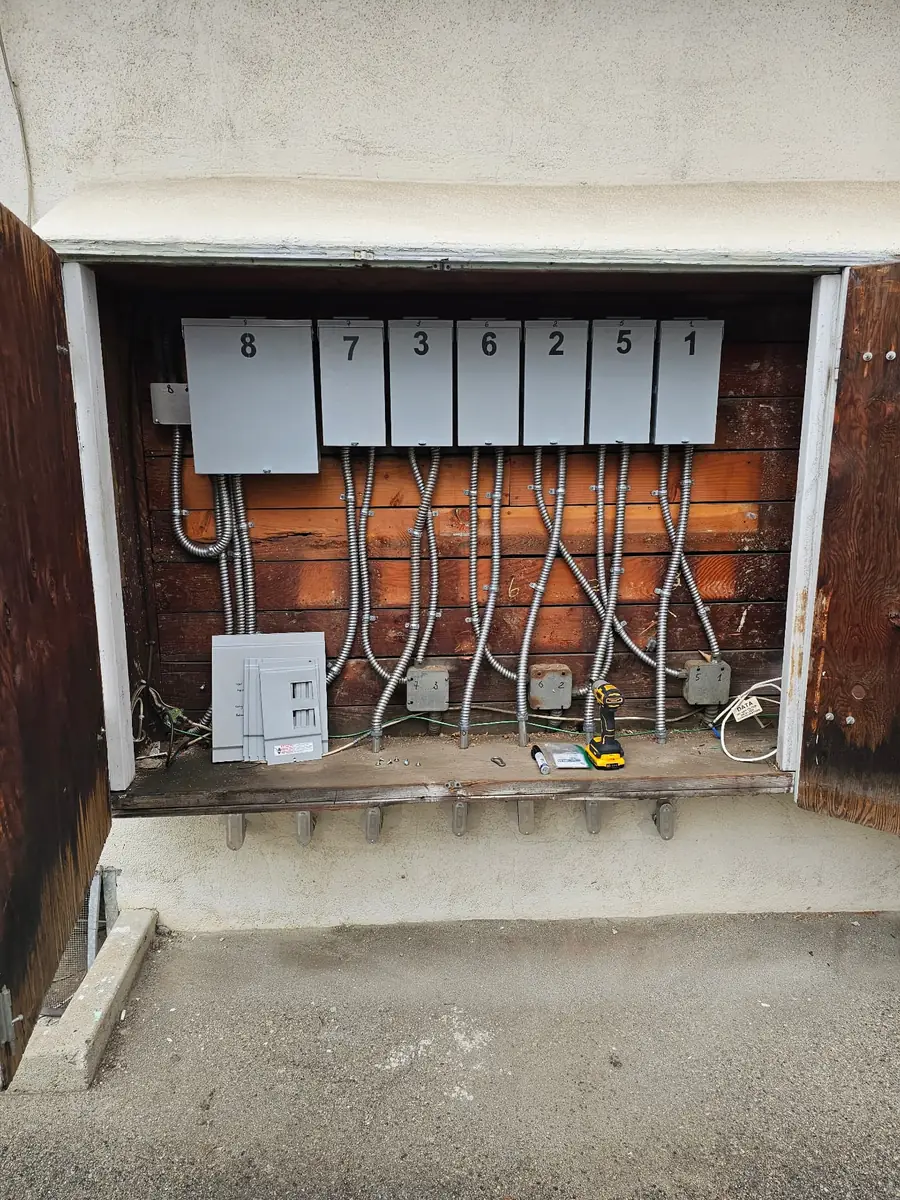
Across Los Angeles, homeowners are transforming detached garages and backyard footprints into rental units, home offices, and guest suites. While choosing countertops and flooring is exciting, the backbone of any accessory dwelling unit is power. Adding a fully functioning kitchen, ductless mini-split HVAC, electric water heater, and laundry to a converted garage places immense demand on your home’s existing infrastructure. Planning your adu electrical service properly from day one makes the difference between a smooth city sign-off and months of costly project delays.
At AA Electrical Services, we have handled residential and commercial power systems across Southern California since 1991. Whether you are building in North Hollywood, Pasadena, Glendale, Burbank, or West LA, here is what you need to know about preparing your electrical system for a permitted, safe ADU.
Sizing Your Main Panel for ADU Electrical Service
Most pre-1980s homes in the San Fernando Valley and greater Los Angeles were built with 100-amp or even 60-amp main service panels. At the time, that was plenty of capacity to run a refrigerator, basic lighting, and a television.
Today, modern electrical demands tell a completely different story. If you try to tap a new secondary residence into an older 100-amp main panel, you will quickly face breaker trips, fire hazards, and an immediate red tag from building inspectors.
Performing a NEC Load Calculation
Under National Electrical Code (NEC) guidelines and California Title 24, an electrician must calculate the home’s total connected electrical load before adding an ADU. This includes:
- Existing general lighting and small appliance branch circuits.
- Fixed appliances (dryer, oven, cooktop, dishwasher).
- Heating and cooling loads (accounting for summer peaks in places like the Valley).
- Electric vehicle (EV) charging stations and solar battery backups.
If your total combined load exceeds 80% of your main breaker rating, a main service panel upgrade to 200 amps—or even 400 amps (dual 200-amp split)—is mandatory.
200-Amp vs. 400-Amp Upgrades
For many standard attached garage conversions or compact junior ADUs (JADUs), a 200-amp main panel service provides sufficient overhead. However, if your main home already has central air conditioning, an electric vehicle charger, and an all-electric kitchen, upgrading your main home to a 320/400-amp meter base may be required to power both residences independently.
Garage Conversion Electrical: Dedicated Subpanel vs. Separate Utility Meter
When executing a garage conversion electrical design, you must decide how electricity will reach the converted space and how consumption will be tracked.
Option 1: Feeder Wire to an ADU Subpanel
The most common and cost-effective approach is running a dedicated 60-amp to 100-amp feeder line from the main service panel to a new subpanel installation inside the ADU.
- How it works: All power flows through the primary utility meter.
- Best for: Homeowners housing family members, using the ADU as a studio, or renting with utilities included in the monthly rent.
- Monitoring: You can install private submeters inside the subpanel to track kilowatt-hour usage if you want to bill tenants separately without utility involvement.
Option 2: Dual-Meter Service (Separate Utility Billing)
If you are creating an investment property intended for long-term third-party tenants, you may want a dedicated meter directly from your utility (such as the Los Angeles Department of Water and Power [LADWP] or Southern California Edison [SCE]).
- How it works: A dual-pack meter socket replaces your current setup. The utility issues two distinct monthly bills.
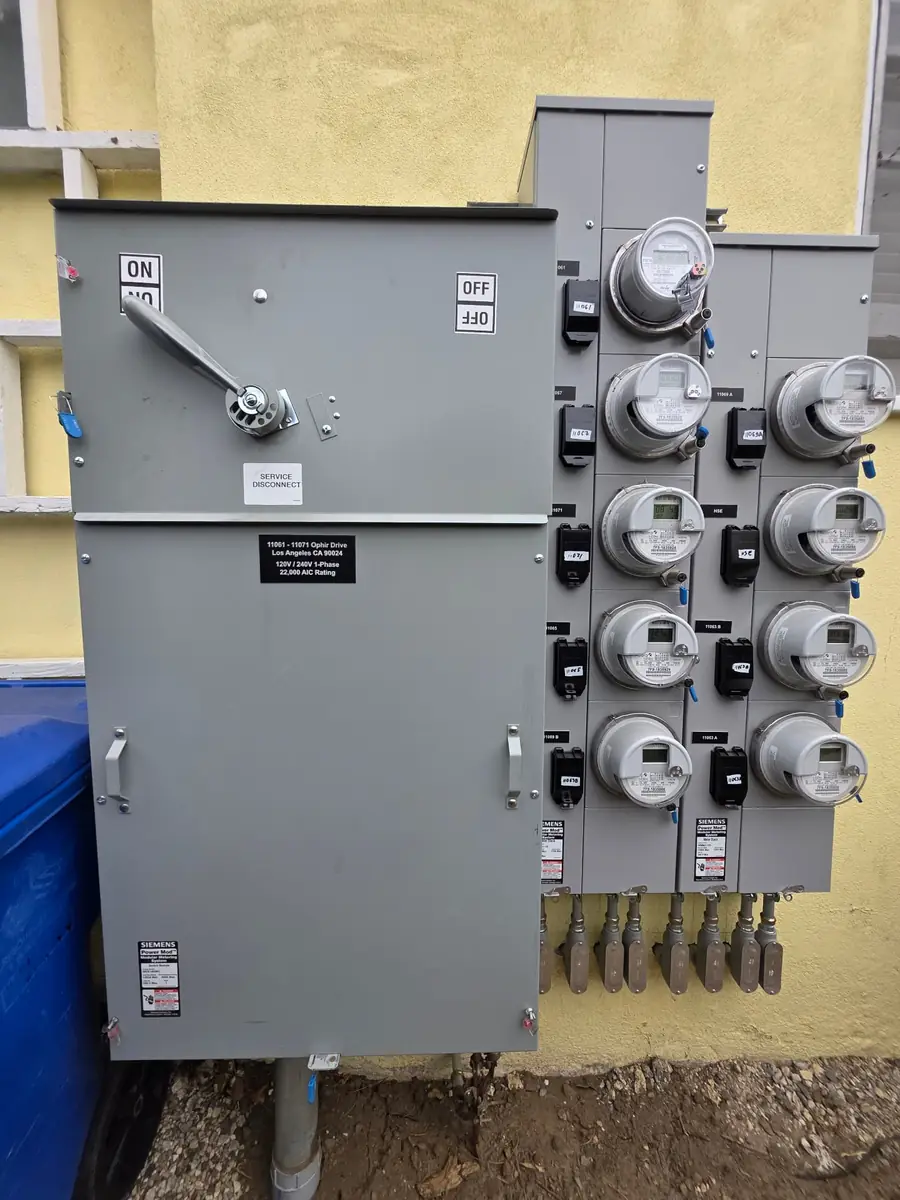
- Considerations: Installing a dual-meter base requires utility engineering approval, new trenching or overhead drops, and potentially higher upfront connection fees.
| Consideration | Subpanel Installation | Dual Utility Meter Setup | | :--- | :--- | :--- | | Upfront Cost | Moderate | Higher (utility fees & complex gear) | | Utility Approval Time | Minimal (standard city permit) | 2–6+ months (LADWP/SCE design review) | | Tenant Billing | Included or private submetering | Completely separate utility accounts | | Physical Footprint | Small panel inside ADU | Larger multi-meter enclosure outside |
Navigating the ADU Permit in Los Angeles & Title 24 Energy Standards
Securing your adu permit los angeles through the Los Angeles Department of Building and Safety (LADBS)—or city offices in Santa Monica, Culver City, or Burbank—demands compliance with stringent state and municipal codes.
California Title 24 Compliance
California’s energy code requires high-efficiency systems for all new dwellings:
- Dedicated Circuits for Heat Pumps: Water heaters and space cooling must meet strict efficiency ratings.
- Solar Mandates: Newly constructed, detached ADUs typically require dedicated photovoltaic (solar) systems. Garage conversions (existing footprints) are often exempt from the solar requirement, but always verify with plan check.
- Controlled Lighting: JA8-compliant LED fixtures and vacancy sensors are required in specific living zones.
Conduit and Trenching Requirements
For detached garages, power must travel underground across your yard. LADBS requires conduit runs to meet minimum burial depths:
- Schedule 40 or 80 PVC conduit typically requires a minimum trench depth of 18 inches.
- Rigid Metal Conduit (RMC) allows shallower depths (typically 6 inches), but carries higher material costs.
- The trench must be inspected before backfilling. Skipping this inspection means re-digging your trench while the inspector watches.
Learn more about our comprehensive commercial and residential capabilities on our /services page.
Signs You Should Not Wait to Upgrade Your Service
Delaying electrical service decisions until the framing and drywall stages of your conversion can stop a build dead in its tracks. Address your panel immediately if you notice:
- Obsolete Panel Hardware: Brands like Federal Pacific Electric (Stab-Lok), Zinsco, or Sylvania have well-documented mechanical failure rates. Most insurance carriers will not cover properties with these panels.
- Frequent Breaker Tripping: If your main breaker or branch circuits trip during hot afternoons when the AC runs, your panel is already maxed out.
- Dimming or Flickering Lights: A noticeable voltage drop when large appliances kick on indicates excessive resistance or insufficient incoming utility amperage.
- Burn Marks or Buzzing: Physical sounds or scorched plastic near circuit breakers are emergency indicators of arcing that demand an immediate licensed inspection.
Cost & Permitting Realities in Southern California
Every home in Los Angeles features unique terrain, panel locations, and utility feeds. Realistic project costs typically hinge on four major variables:
- Utility Service Upgrades: If your overhead line from the pole cannot handle 200 amps, LADWP or SCE may require a service drop upgrade. If lines are underground, civil engineering and pull boxes may add expense.
- Distance and Trenching: Running feeder lines 30 feet through open soil is far less labor-intensive than cutting through 80 feet of reinforced concrete patio.
- Panel Clearances: Modern codes require a clear workspace in front of the main panel (30 inches wide by 36 inches deep, with 6.5 feet of headroom). If an older panel is trapped in a breezeway or behind gas meters, relocating it adds labor and conduit.
To budget accurately, schedule a site assessment early in your design phase. You can get an upfront assessment by visiting /get-estimate.
Frequently Asked Questions
Can I run my garage conversion off the existing garage circuits?
No. A standard detached garage usually has a single 15-amp or 20-amp circuit supplying an overhead light bulb and a couple of wall outlets. An ADU requires independent 120V and 240V circuits for cooking, refrigeration, bathroom GFCIs, laundry, and heating/cooling. Attempting to run a dwelling unit on existing garage wiring is an immediate code violation and fire hazard.
How long does LADBS take to approve an electrical permit for an ADU?
Standard residential electrical permits can often be pulled online or through express plan check if part of an approved architectural plan set. However, if your project involves a panel relocation, service capacity upgrade over 200 amps, or utility involvement with LADWP or SCE, utility design clearances can add several weeks to months. Plan ahead.
Is an EV charger required for an ADU in Los Angeles?
While not always mandatory for the ADU occupant specifically, California Green Building Standards (CALGreen) and local ordinances require EV-capable raceways (conduit) or designated EV charging spaces for many residential remodels and additions. Preparing your subpanel with enough amperage to support a 40-amp or 50-amp Level 2 charger now saves thousands in future retrofits.
Do I need arc-fault (AFCI) breakers in the new unit?
Yes. Current California Electrical Code mandates AFCI protection for virtually all 120-volt, 15- and 20-amp branch circuits in dwelling unit kitchens, family rooms, dining rooms, parlors, libraries, dens, bedrooms, sunrooms, recreation rooms, closets, hallways, or similar rooms. AFCI breakers prevent electrical fires by detecting unintended electrical arcs.
Power Your ADU Safely with a Licensed C-10 Electrician
Your ADU is a major investment. Don't let underpowered wiring, code violations, or failed city inspections jeopardize your timeline. Working with a qualified, licensed C-10 electrical contractor ensures your subpanel installation, main panel upgrade, and trenching pass inspections on the first visit.
Have questions about your project in Los Angeles or the surrounding valley? Reach out to our team at /contact, or call AA Electrical Services directly at (818) 437-6736 to request your free project estimate at /get-estimate.